
Global politics became even more volatile this year under the Trump administration, and as research shows, discretionary long-haul travel is one of the first casualties of geopolitical instability. Unpredictability is the enemy of tourism, and in Africa, we are traditionally over-reliant on a handful of Western markets, particularly Europe and North America.
A May 2025 World Tourism Barometer survey by the UN World Tourism Organization shows that skyrocketing travel costs, weaker economic growth and the increase in tariffs were the main challenges impacting international tourism last year. “Uncertainty emanating from growing geopolitical and trade tensions is weighing on travel confidence. Tourists are likely to travel closer to home, make shorter trips and spend less,” says Kate Nathan, editor at Travel News, an industry publication.
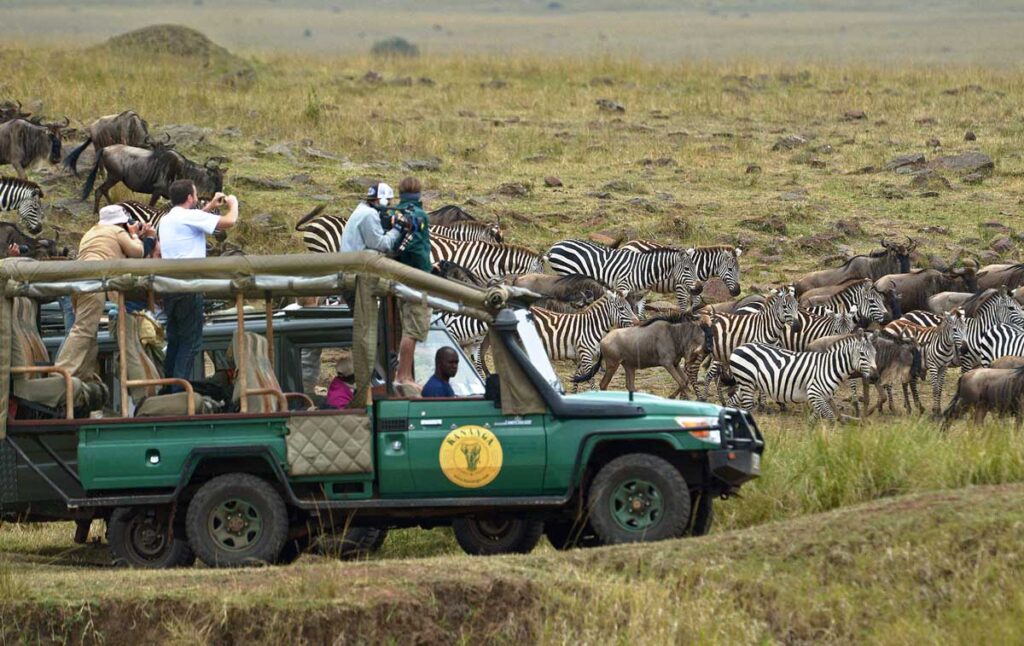
Also, Western markets gravitate towards safari-centric, luxury-heavy tourism, which means that only a handful of regions – Kenya’s Maasai Mara, South Africa’s Kruger National Park and surrounds, Botswana’s Okavango, and Tanzania’s Serengeti – capture most of the tourism revenue, while urban centres, secondary cities, and cultural regions are marginalised.

The final declaration from the G20 summit last year explicitly recognised tourism as a key driver of inclusive and sustainable economic growth in Africa, with commitments to promote innovation and investment, enhance international connectivity, mobilise public-private capital, and integrate tourism into national development strategies.
However, “too many African destinations are fighting for the same shrinking pie (primarily Western long-haul travellers) when the real opportunity lies in diversification,” comments Michelle Gounden, director of insights at the travel research consultancy, Skift Advisory, in the 2025 State of the African Industry Report: Ignite Africa! “Skift’s data shows that outbound travel from the Middle East and India is growing at double the global average, yet tailored experiences for these markets remain limited,” she says.
Diversification means breaking from historical marketing pathways and instead targeting intra-African tourism (the largest untapped market), Asia (China, India), the Middle East (Gulf states, Türkiye), Latin America (Brazil, Mexico), and the global African diaspora.
Tapping these markets, however, begins with addressing accessibility and tourism infrastructure, which in many African countries falls far short of international standards, according to the World Economic Forum (WEF)’s Travel & Tourism Development Index 2024 (TTDI), which measures how well countries are prepared to develop tourism sustainably and resiliently.
In other words, these countries lack the foundational systems and services, like reliable transport, digital connectivity, energy, sanitation, and governance frameworks, that are necessary for tourism to grow sustainably, inclusively, and competitively. South Africa is the highest-ranked African country, 55 out of 119 countries globally, followed by Ghana at 106, reflecting the tourism infrastructure and services challenges that African countries face.
High travel friction (total journey time, number of connections, visa complexity, and uncertainty) exacerbates the situation. Tourism boards and operators tend to avoid promoting markets with no direct flights or with complex routing, which reinforces the tendency to undersell African destinations.
Caroline Ungersbock, CEO of the Sustainable Tourism Partnership Programme, says a lack of airport infrastructure is a major stumbling block to tourism in Africa, especially in remote places like the central Karoo in South Africa’s Northern Cape province, where she has moved, partly to lead an initiative to transform an old aerodrome in Victoria West into a functioning national airport.
“Underdeveloped areas don’t develop on their own. You need a catalytic project like this to kick-start a tourism economy in rural regions like this one. An airport would transform the tourism market here, making the region far more accessible,” she says.
Meanwhile, although there are ongoing efforts across Africa to reduce visa restrictions and ease intra-continental travel – with the African Union (AU) continuing to push for visa-free movement across the continent – progress is uneven and slow. Ghana and Kenya led the way last year, scrapping visa requirements for African nationals, and Burkina Faso removed visa fees, but most North African countries (Egypt, Algeria, Libya, Morocco, and Tunisia) maintain traditional visa requirements for African travellers, limiting movement between that region and sub-Saharan Africa.
“Why should I be charging my own brother next door for a visa? That is something that has inhibited tourism in our respective countries and our continent,” Rodney Sikumba, chairperson for the UN Tourism Regional Commission for Africa (CAF), told delegates at the meeting of the 68th CAF in Abuja, Nigeria, in June last year. This meant significant losses of potential tourism revenue for the continent. “Today, 60%, if not 70%, of African tourists actually travel out of the continent,” he said.
On-the-ground transport also needs attention. Poor or insufficient coverage of bus and train services means tourists from neighbouring countries can’t reach secondary destinations cheaply, restricting or even nullifying opportunities for affordable weekend trips, cultural tourism, and cross-border travel. In Southern and East Africa, for example, trains between safari parks, cities, or heritage sites are often infrequent, forcing tourists to pay high prices for domestic flights or to hire private transport.
There are pockets of progress. The Trans-Sahara Highway (Algiers-Lagos – 4,500 km), part of the Trans-African Highway Network Projects, is nearing completion, improving connectivity between North and West Africa. And in Maputo, Mozambique, a pilot project launched last year by CFM – Ports and Railways – will connect buses with rail stations using a unified ticketing system, making it easier and more seamless for passengers to move around the city and its outskirts.
Accommodation offerings, entertainment hotspots and restaurants naturally follow easy-to-access destinations, but in markets like Nigeria, Democratic Republic of Congo, Kenya, Mali and Libya, unclear policy frameworks, bureaucracy and inconsistent regulation create real hurdles for hotel and accommodation development.
“The regulatory environment in many African countries can be complex, opaque and unpredictable, with frequent changes to laws and regulations. This can make it difficult to obtain the necessary permits and approvals to build a hotel project,” comments Frederic van Lennep, Business Development Director for Hotel Partners Africa, on Hospitality Net, adding, “Security can be a major concern in many parts of Africa, with risks such as theft, vandalism, and terrorism. This can increase the cost of securing the site during construction and can also affect the hotel’s ability to attract guests.”
Finally, marketing narratives and products need to be tailored to specific regions, emphasising ancient civilisations, trade links, and spiritual and cultural depth, rather than relying solely on wilderness. African destinations could market themselves to the Turkish market as a summer alternative to Europe, for example, offering halal-friendly services, privacy, shopping, and investment opportunities.
One proposition rural operators should consider is astrotourism, suggests Ungersbock. “The skies of Africa are relatively unpolluted. South Africa developed an astrotourism strategy in 2022, which was adopted by parliament and launched in 2025. Astronomy is growing in Africa through the African Astronomical Society and can be leveraged to grow rural tourism.”
The future of tourism in Africa, therefore, hinges on gearing towards new markets while not forgetting the invaluable Western markets and their dominant consumer trends, one of which is a strong shift towards ethical and responsible tourism, i.e., sustainable tourism.
Sustainable tourism is not confined to waste-conscious eco-lodges, Ungersbock points out, but includes social impact (whether local communities are employed fairly and share in profits), cultural respect (whether traditions are preserved or exploited for entertainment), economic sustainability (whether tourism income stays local or flows to other regions or foreign corporations), and environmental custodianship (protecting the ecosystem).
“Sustainability essentially means conscientious, community-conscious business practice. It means providing a service, including to your employees, the environment and the community in which you operate. Considering that on average, tourists make around 11 purchasing decisions per day, a tourism operator needs to be part of an economic ecosystem that offers a wide range of engaging and accessible experiences that encourage spending,” says Ungersbock.
To fulfil the G20 tourism aspirations and successfully pivot to new markets, the task is to make investment easier, safer, and more predictable than in competing global destinations. And as no investor believes in marketing campaigns without infrastructure, access must be fixed first. In other words, if locals can’t get there easily, tourists won’t either.

Helen Grange is a seasoned journalist and editor, with a career spanning over 30 years writing and editing for newspapers and magazines in South Africa. Her work appears primarily on Independent Online (IOL), as well as The Citizen and Business Day newspapers, focussing on business trends, women’s empowerment, entrepreneurship and travel. Magazines she has written for include Noseweek, Acumen, Forbes Africa, Wits Business Journal and UJ Alumni magazine. Among NGOs she has written or edited for are Gender Links and INMED, a global humanitarian development organisation.