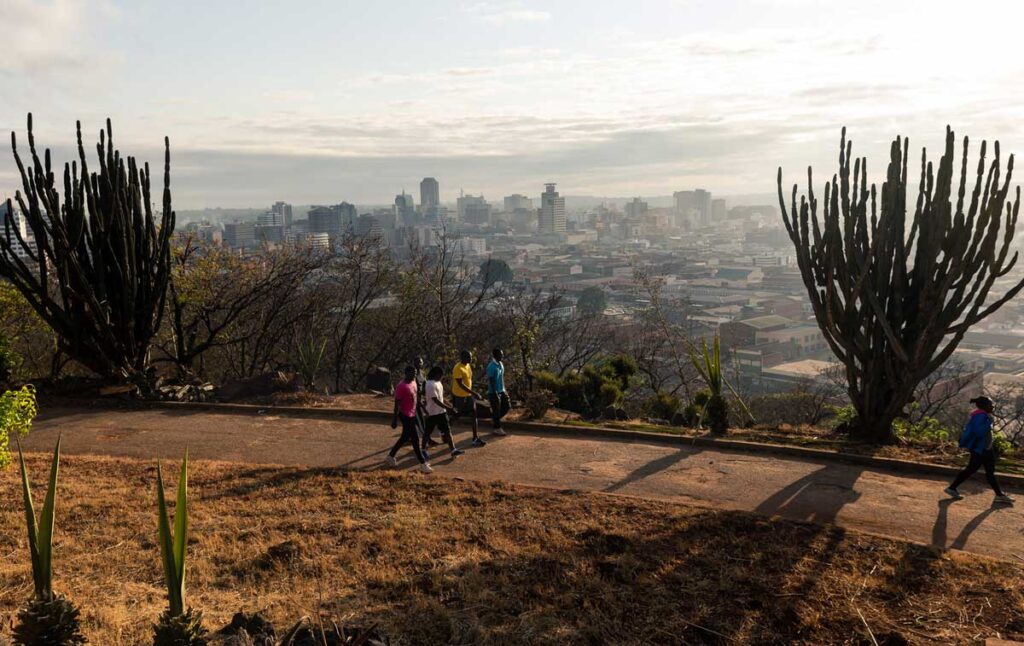
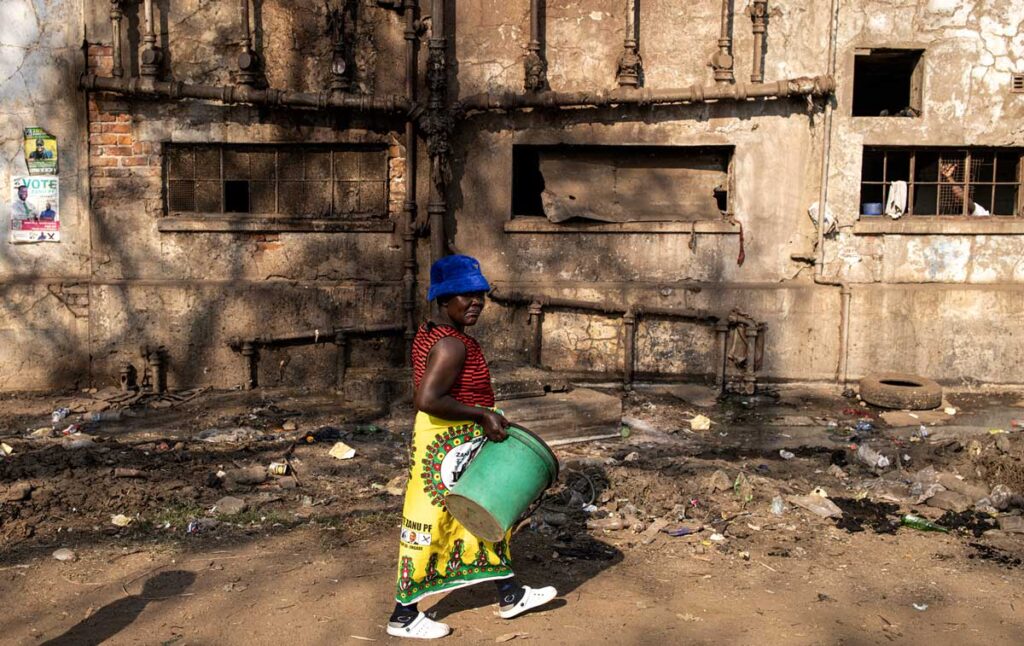
Can Zimbabwe’s cities evolve from sites of survivalist urbanisation into engines of inclusive growth? The question is no longer theoretical. In Harare, the signs of strain are visible in burst sewer lines, uncollected refuse, dry taps and mushrooming informal settlements on the urban periphery.
Yet these symptoms reflect deeper structural tensions: centralised political power, fragile municipal governance, and a land tenure system that produces insecurity rather than investment. Zimbabwe offers a compelling case study for understanding the African urban frontier – where governance, land, and economic survival intersect.
The rate of urban growth in Zimbabwe is more a reflection of population growth than of infrastructure. Zimbabwe’s economy has been gutted by bankrupt public policies and corruption. This negatively affects, if not thwarts, the rate of infrastructure growth.
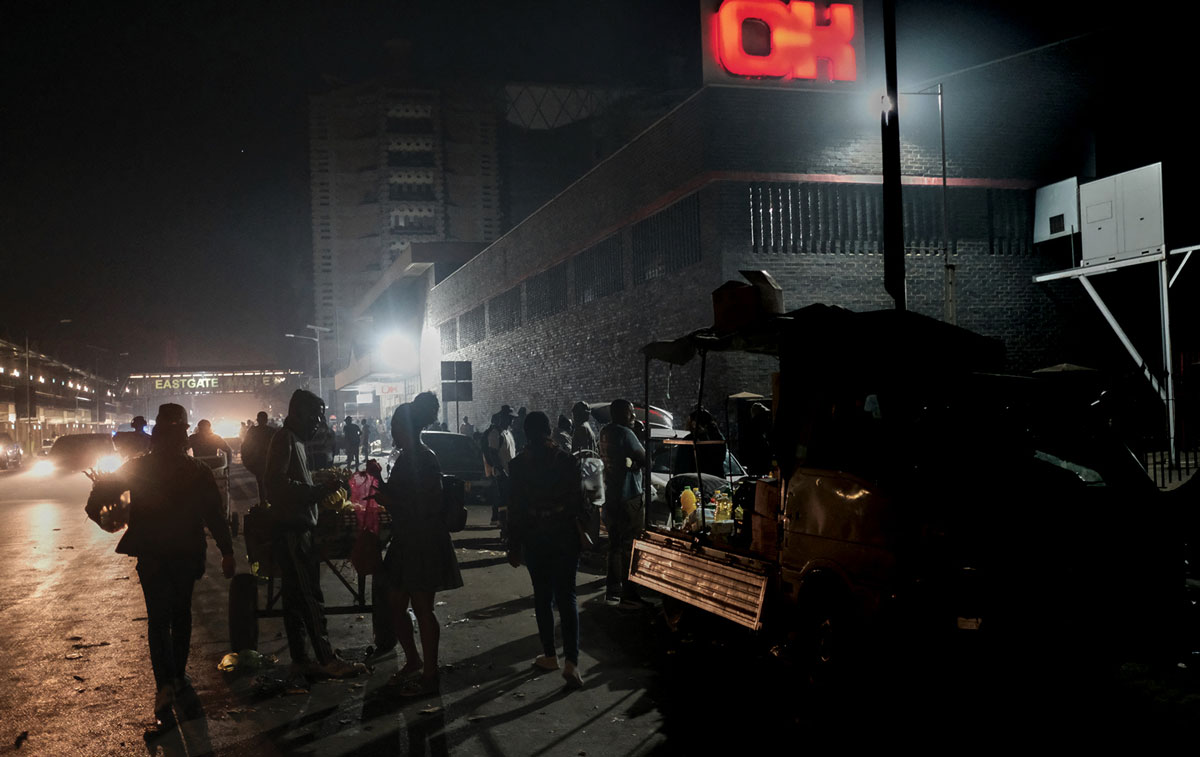
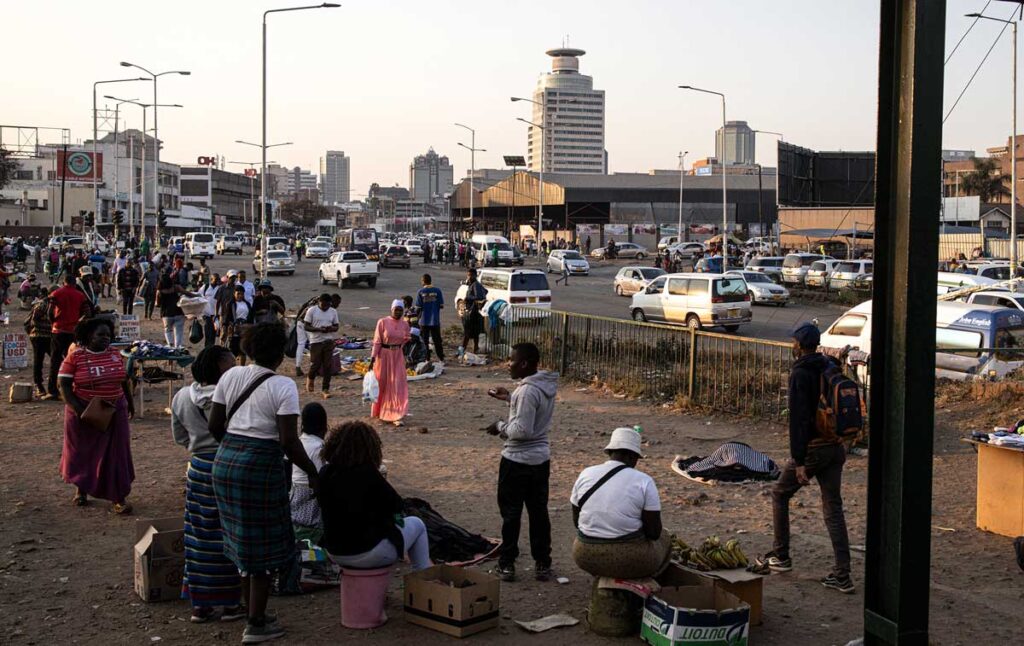
Zimbabwe’s urbanisation has accelerated without a commensurate expansion in formal employment or industrial growth. Cities are growing, but productivity is not. In Harare and Bulawayo, informal trading now dominates large sections of the urban economy. Street vendors line pavements not only because of entrepreneurial vibrancy but also because formal economic absorption has stalled. Peri-urban settlements expand not through coordinated planning, but through land cooperatives, informal subdivisions, and politically mediated allocations. This is cities as shock absorbers for economic distress rather than engines of growth.
One of Zimbabwe’s leading architects, Mick Pearce, told Africa In Fact that the major problem facing Harare, and indeed other urban centres, was rural-urban migration, which forced people to adopt rural strategies to survive in urban settings.
“During the late 2020s, a quiet change has begun in the way many people live in Harare,” Pearce said. “In 2026, the city released a new master plan that included statistics showing that about 80% of residents earned less than $400 per month. Faced with this reality, many households developed ways of living within that limit.
These included farming in wetlands and setting up vendor sites in the Central Business District or high-density areas. “Cultivating in any way on open grassland wetlands is like fishing in an aquarium,” Pearce said. “These wetlands are damaged, but if left alone, they can be restored. Agriculture on wetlands makes money for some but depletes water for all. You can see how difficult it is for people to leave wetlands alone. We are taught to use everything and feel we have failed if we do not. Very sad indeed.”
Rejoice Ngwenya, the founder and director of the Coalition for Market and Liberal Solutions (COMALISO), said the scourge of informality manifests itself in thousands of vendors in Harare and other CBDs, displacing serious corporates to suburban locations like Borrowdale. Moreover, a skewed foreign-exchange policy deters real estate investment. “If anything, the future is more about how local authorities can manage squatters, and with this comes the pressure to regularise informal settlements and issue title deeds,” he said.
The founder and co-ordinator of the Harare Residents Trust (HRT), Precious Shumba, said that at the heart of Zimbabwe’s urban challenge lies a structural contradiction. “Urban local authorities are constitutionally recognised, yet their autonomy remains constrained by central government oversight,” she told AIF. “Urban councils – often politically controlled by opposition parties – operate in an environment of contestation. This political tension has direct administrative consequences. Decision-making slows. Borrowing capacity weakens. Long-term infrastructure planning becomes episodic.”
The chairman of the Bulawayo Residents Association, Winos Dube, told AIF that the major challenges facing Zimbabwe’s second city were the dearth of industry, resistance to paying rates, and the scourge of illegal mining. He said the revival of industry could result in job creation, generating income for both residents and the local authority. “Residents would be able to meet payment for services given by the local authority,” he said.
Unlike South Africa’s comparatively institutionalised municipal performance audits, Zimbabwe lacks a transparent, independent system for benchmarking service delivery, fiscal health, and governance standards across cities. As a result, accountability mechanisms are reactive rather than systemic. Without administrative stability and fiscal predictability, cities struggle to function as developmental actors.
“The critical issue facing local governments’ tenure in the future of Zimbabwe’s cities, particularly Bulawayo, is the absence of respect for the rule of law,” Bulawayo mayor David Coltrart told AIF. “This affects the city in a variety of ways. In Bulawayo, the proliferation of vendors and the informal sector is crowding out the formal sector, creating massive traffic problems and potentially health problems,” Coltart said.
“One can see that it is a direct result of the breakdown of the rule of law within the city and our failure to enforce our laws. This has come about for a variety of reasons, but one of the principal reasons is that the city’s municipal police lack the power to arrest. We are reliant on the Zimbabwe Republic Police to enforce by-laws.”
Coltard said the Zimbabwe Republic Police had not been particularly cooperative, and the government’s reluctance to enforce its own laws was an existential threat to the city. He added that, despite the rainy season, the vast majority of Bulawayo’s dams were below 50%, mainly due to rampant, illegal and unchecked artisanal mining of gold and lithium in the city’s rivers and water-catchment areas.
“Despite our repeated pleas to the government that their own laws be complied with, which ban riverbank and river mining, we are finding that there has been no attempt to enforce that, either by the Environmental Management Authority, the police, or even the military. And once again, the municipal police do not have the power to arrest.”
Social commentators have said Harare exemplifies the pressures facing southern African capital cities. Water supply interruptions have become routine. Ageing sewer infrastructure contaminates water sources. Road networks deteriorate faster than maintenance budgets can accommodate. Electricity instability compounds municipal service failures.
If land is Africa’s most significant development bottleneck, Zimbabwe arguably stands at the epicentre of the debate. The country operates under overlapping tenure systems: communal land governed by customary authority; resettlement land under 99-year leases following land reform; and urban freehold and leasehold titles.
In peri-urban Harare, these systems collide. Former agricultural land is subdivided through cooperatives or politically connected intermediaries. Residents often receive offer letters rather than bankable title deeds. Informal settlements proliferate before servicing plans are approved. The result is legal ambiguity. Without a secure, transferable, and widely recognised title, property cannot easily serve as collateral. Investment is constrained. Disputes multiply. Infrastructure provision becomes costly and retroactive. Rather than enabling urban transformation, land becomes a source of fragility.
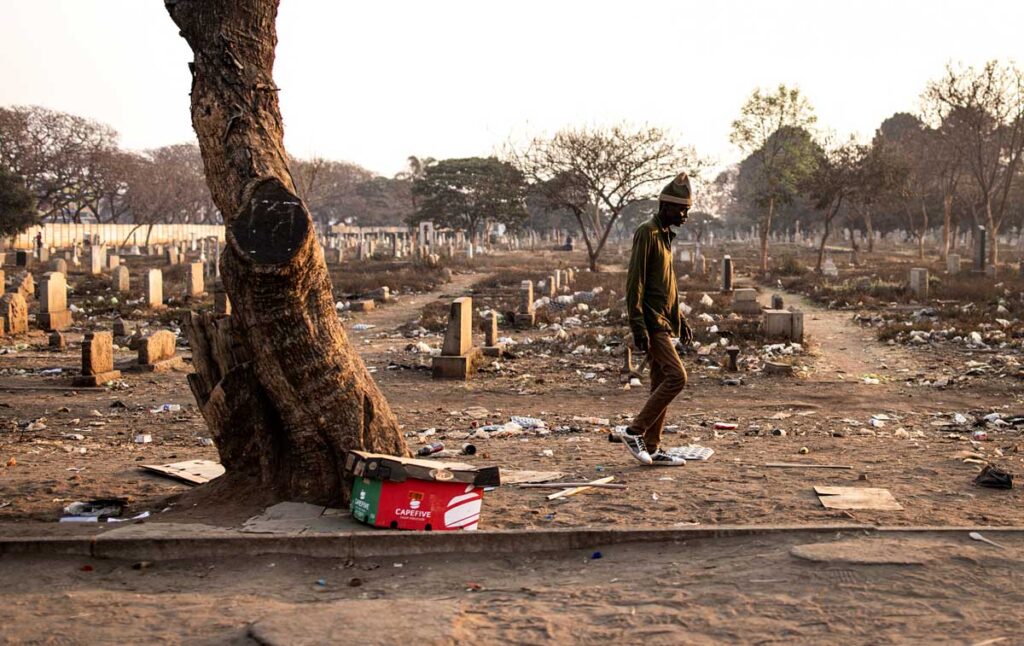
Around Harare’s northern and southern fringes, settlements have expanded faster than formal planning frameworks can accommodate them. In many cases, roads are narrow and unserviced, sewer systems are absent, and informal water connections proliferate.
This mirrors tensions seen elsewhere in Africa, where rural land management systems clash with urban planning regimes. Traditional leaders, land barons, cooperatives and municipal authorities operate within overlapping jurisdictions. By the time formal authorities intervene, settlement patterns are already entrenched – making regularisation expensive and politically sensitive. Urban growth is proceeding ahead of governance.
According to Ngwenya, Zimbabwe’s urban transition hinges on several structural reforms:
- Clarified and bankable tenure: Harmonising peri-urban land systems and accelerating secure, transferable title (while protecting vulnerable residents) would unlock investment potential.
- Strengthened municipal autonomy with accountability: Greater fiscal predictability and professionalised administration, coupled with transparent performance audits, would enhance service delivery.
- Modernised property valuation, improved rate collection, and digital billing systems would stabilise municipal finances.
- Planned peri-urban integration: Instead of reactive demolitions or ad hoc regularisation, forward-looking spatial planning must precede settlement expansion.
Depoliticised urban administration: Urban management must prioritise technical competence over political contestation. Without this shift, infrastructure decay will outpace reform efforts.
“Zimbabwe’s cities are not failing because urbanisation is inherently destabilising,” Ngwenya said. “Cities are struggling because institutional reform has lagged behind demographic and spatial change. Harare remains the country’s economic nerve centre. If it continues to function primarily as a site of informal survival, national growth will remain constrained.”

Barnabas Thondhlana has worked for Dow Jones and Bloomberg newswires as their Zimbabwe correspondent. He is the publisher of three community newspapers and a national daily, and a media trainer in investigative journalism. He has been instrumental in the formation of several independent newspapers, including the Zimbabwe Independent, The Daily News, The Daily News on Sunday, Newsday and The Observer.