In June 2018, Togo adopted a new land and property code to reduce land disputes and improve the rational management of land nationwide.
Yet this reform has not reduced the pressure on Lomé, the country’s capital. To better plan urban growth in the capital, in 2018, the authorities also prepared a master plan for urban development and land use in Lomé, but implementation was delayed due to a lack of reliable mapping data.
According to official figures from the Ministry of Urbanisation, the population of Lomé grew from 1.57 million to more than 2.18 million between 2010 and 2022. This growth represents an average annual increase of 2.7% within an initial surface area of 373 km2.
The city has expanded rapidly beyond its original limits. New housing areas have spread in a disorderly manner into nearby agricultural zones. This rapid peri-urban growth has created several challenges, including limited access to essential infrastructure, an unequal distribution of public services, congestion on transport networks, and the fragmentation of urban spaces.
In March 2025, however, determined to ensure proper execution of the new vision for the city, the authorities launched a four-month geolocation and analysis study. This exercise gathered geospatial, socio-economic and infrastructure data, and the country now has a comprehensive reference framework on urban expansion in Lomé and its surrounding areas.

The new geospatial reference system has enabled mapping and monitoring of land use across 13 municipalities in the capital. The mapping also covered the prefectures of Golfe and Agoènyivé, which include newly developed housing zones resulting from the city’s rapid, uncontrolled expansion. With this mapping, the authorities now have a reliable database to plan the development of Lomé and its surrounding communities.
“The reference instrument will strengthen the urbanisation policy of the Lomé district, improve the coherence of sectoral strategies and ensure harmonious, balanced and sustainable management of space in the Togolese capital,” Tchalim Tagba, Secretary-General of the District Autonome du Grand Lomé, told Africa in Fact.
“This operation aims at territorial planning and strategic decision-making to clean up the city and counter uncontrolled sprawl, land speculation and natural disasters such as flooding,” Hervé Adjamagbo, an urban planner, told Africa in Fact.
The master plan now serves as the main reference document for regulating urbanisation in the capital and harmonising public investment projects. It sets out a detailed programme of action built around five major strategic directions aimed at transforming Lomé into an attractive, structured and sustainable metropolis by 2045.
The priority is spatial and structural planning, alongside infrastructure development. This component seeks to organise the transformation of the capital into a modern metropolis.
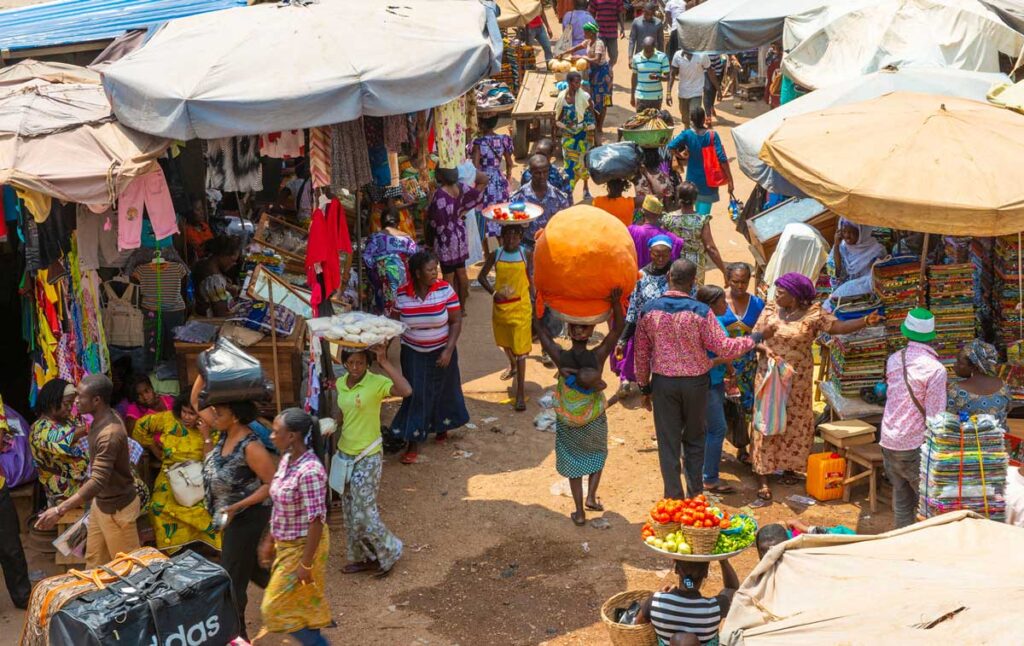
Lomé, which hosts a quarter of the country’s total population, faces many pressing challenges. These include imbalances in the location of public services, pressure on transport networks, fragmentation of residential areas and limited access to basic social infrastructure.
The city continues to expand each year towards the north and east. Measures are therefore being taken to define residential zones and business areas, while taking into account the location of key social infrastructure. Green spaces are also being developed in several municipalities of the capital.
“Thanks to this master plan, land-use planning has become far more rational. Today, the authorities know the geographical situation of each municipality and the infrastructure that exists or is lacking in those municipalities,” noted Adjamagbo.
Another component of the master plan focuses on environmental protection and strengthening resilience against natural disasters.
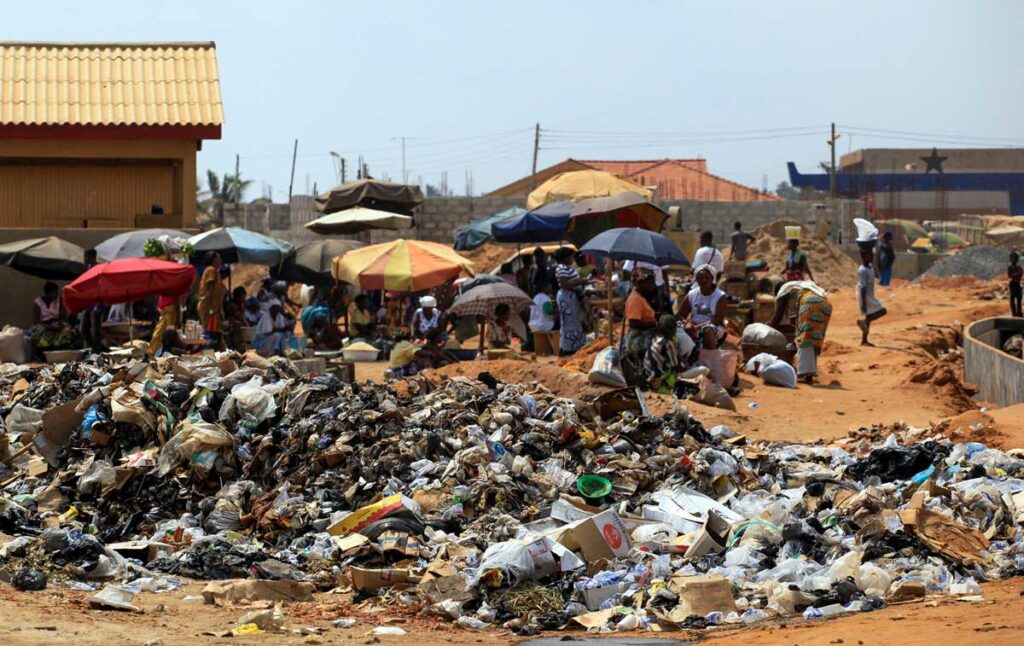
Waste management is also a central element and remains a major challenge. Official data show that around 900 tonnes of waste are produced daily in the capital. Under the new transformation vision, private companies will be responsible for waste collection across all municipalities through a public-private partnership.
The initiative complements national sanitation services overseen by the Agence nationale d’assainissement et de salubrité publique (ANASAP), established in 2013. Around 10 private urban waste collection companies operate in each municipality of the capital.
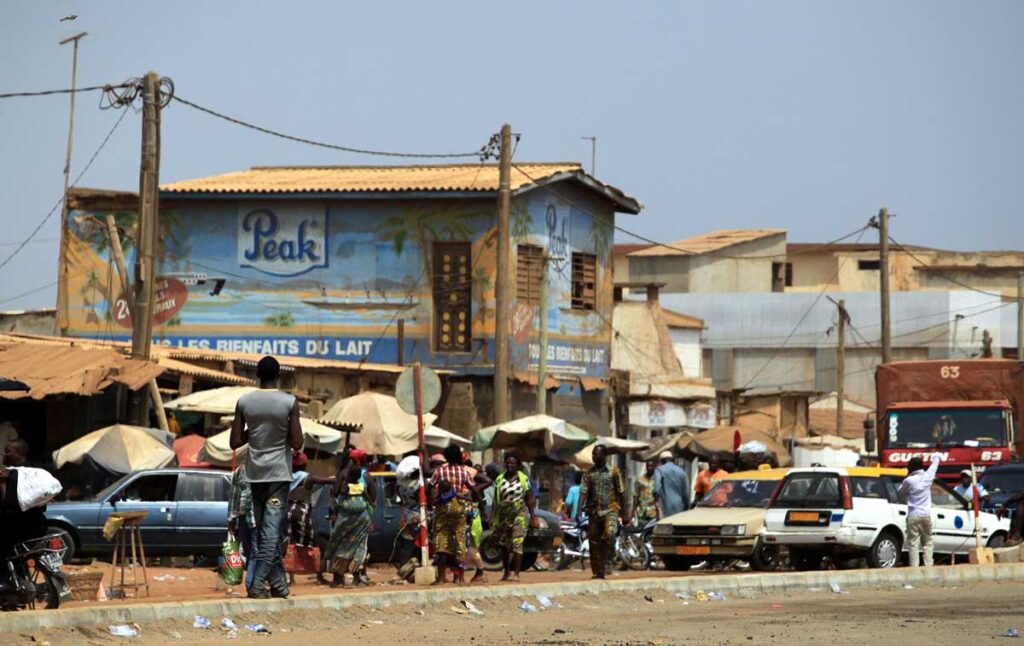
Some analysts hope that, with the new master plan, waste management will be integrated into the early design of new neighbourhoods emerging on the city’s outskirts. They are encouraging the authorities to focus on building a value chain in waste management to move from a disposal model to a circular economy based on waste recovery.
“Waste management must be integrated from the urban planning stage with, for each new neighbourhood, collection points, collection corridors and spaces dedicated to sorting and recovery,” Edem D’Almeida, a waste management expert and Director-General of Africa Global Recycling, a Togolese company specialising in waste recycling in West Africa, told Africa In Fact.
The approach has attracted interest from other administrations, including Djibouti. A delegation from the Agence Djiboutienne de Développement Social (ADDS) visited Lomé from 13 to 17 October 2025 to study the capital’s solid waste management model.
The Aképé engineered landfill site, recently built on 94 hectares around 20 km from the capital, treats an average of 20,000 tonnes of waste per month. It is considered a regional reference point, with a burial capacity of around 300,000 tonnes. About 70 trucks unload waste there each day.
In addition, six private companies specialising in the treatment and recycling of urban waste such as plastics, metals and paper operate in the capital. They help create green jobs and support the circular economy in Lomé.
But urban expansion in Togo has also increased the risk of land disputes. Tensions arise when modern land law, introduced through reform, sometimes overlaps with customary land rights that still prevail in certain communities.
To prevent land conflicts during the implementation of the master plan, the authorities have considered residents’ concerns across all municipalities of the capital and surrounding localities. Local actors, including traditional chiefs and mayors, have been involved in the implementation process.
“It is a long-term vision that involves all stakeholders, including traditional chiefs, because a large part of the land in these areas belongs to local communities,” Togbui Edem Kodzo Sémékono, chief of the canton of Sagbado on the outskirts of the Togolese capital told Africa in Fact.
However, he acknowledged that the late demarcation of new administrative reserves intended for basic infrastructure in expanding neighbourhoods has caused dissatisfaction among residents due to expropriations carried out in the public interest.
“It is true that this master plan is transforming the capital into a modern and sustainable city, but the authorities demarcated the administrative reserves too late. People built their homes in places that are now classified as administrative reserves in the master plan. So, there are expropriations. This issue should have been resolved before the master plan was drawn up,” the canton chief noted with regret.
In May 2025, however, the authorities established a permanent consultation framework to ensure that residents’ concerns were taken into account in implementing the new planning approach. It brings together the mayors of the 13 municipalities and the traditional chiefs of the 11 cantons of the capital. They hold quarterly meetings to exchange views and assess actions taken under the master plan.

Blame Ekoué is the Togo correspondent for the BBC and for Paris-based media house, ANA. He has also reported for Associated Press and Radio France International. He holds a BA in Communications from the Leader Institute in Lomé. Formerly deputy editor of the West Africa Revue, he has been a contributor to the Lome-based Business and Finance magazine since 2015.