The Organisation for Economic Cooperation and Development (OECD) has projected that Africa’s urban population will double from around 717 million in 2020 to 1.4 billion by 2050, to become the world’s second-largest urban population after Asia. At the same time, urbanisation has contributed roughly 30% of Africa’s GDP per capita growth over the past two decades. African cities are therefore not peripheral to development; they are central to it.
Africa’s projected urban growth represents a valuable demographic resource and major economic opportunities, particularly in sub-Saharan Africa (SSA). Yet this potential is deeply complicated by the persistence and expansion of informal housing, which makes rapid urban growth appear less like an opportunity and more like a crisis of absorption. Where, and under what conditions, will these populations be accommodated?
As cities grow rapidly and expand their markets and infrastructure, they become the main arena for the continent’s development. Pushed by factors such as rural poverty and agrarian stress, people migrate to cities due to limited livelihood options (work, education, services, healthcare, and social mobility) elsewhere.
This is why the urban question is now central to African development. The same cities that attract people with the promise of opportunity often fail to provide enough affordable housing, serviced land with basic infrastructure and secure employment. These shortcomings hinder cities’ ability to absorb growth in a fair and sustainable way. A commonly cited World Bank/UN-Habitat estimate shows that in 2022, 43% of SSA lived in urban areas, and 53.7% of that population lived in slums. What this figure captures is not just an unfortunate current reality, but the accumulated result of urban growth that has long outpaced planning and service provision.
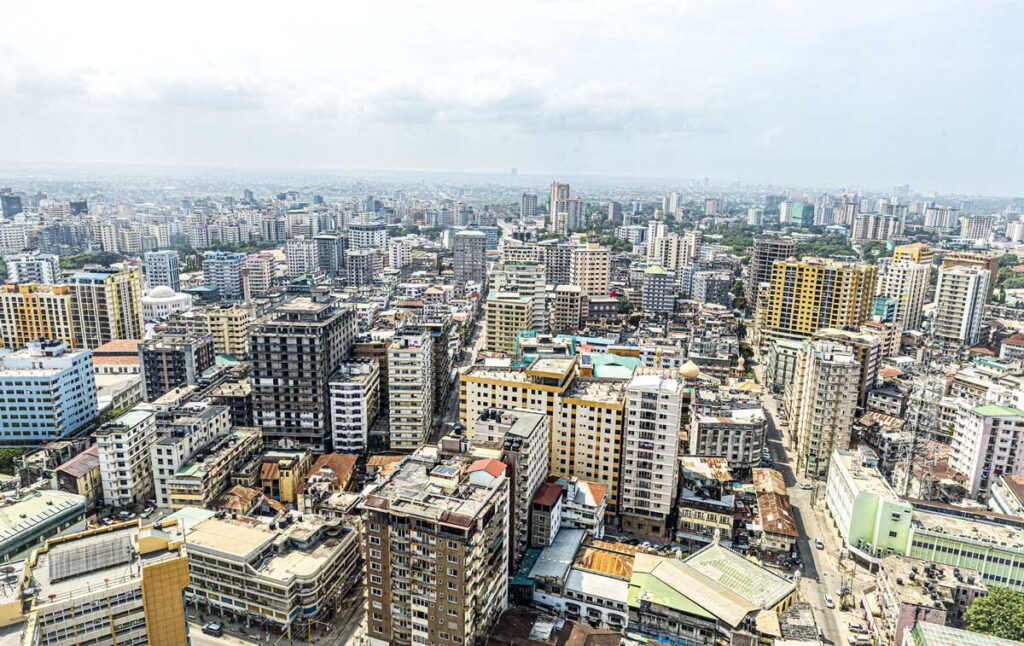
When formal employment creation is weak, affordable formal housing is scarce, and planned land is not released at scale, new residents are absorbed into informal housing. This often takes the form of informal renting, self-built housing, and settlement on unplanned, insecure land.
As this growth takes place outside surveyed land and beyond the reach of timely planning, the limits of state capacity become visible. The result is not only precarious housing, but also weak service delivery, vulnerable tenure, infrastructure that is harder and more expensive to extend, and governance that becomes fragmented and reactive rather than anticipatory. Whether intentional or structural, such patterns reproduce discrimination and urban marginalisation.
Governments may tolerate informality, attempt to regularise it later, or occasionally repress it, but none of these is substitutes for governing growth early enough. Informal housing governance, therefore, reveals a basic truth about contemporary African urbanisation. The real test of state capacity lies not in rhetoric or plans. It is not just a question of whether governments understand the extent of urban change, but whether they can translate urban expansion into planned, serviced and governable urban form, before informality becomes the default mode of expansion.
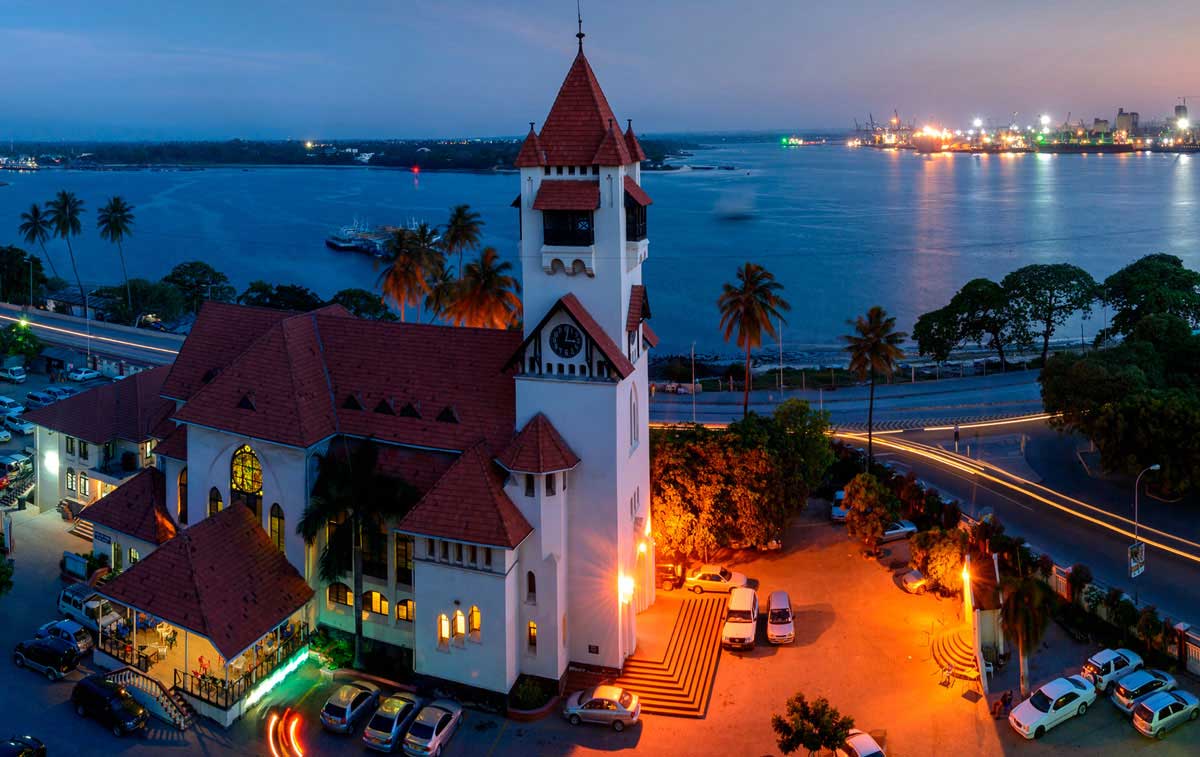
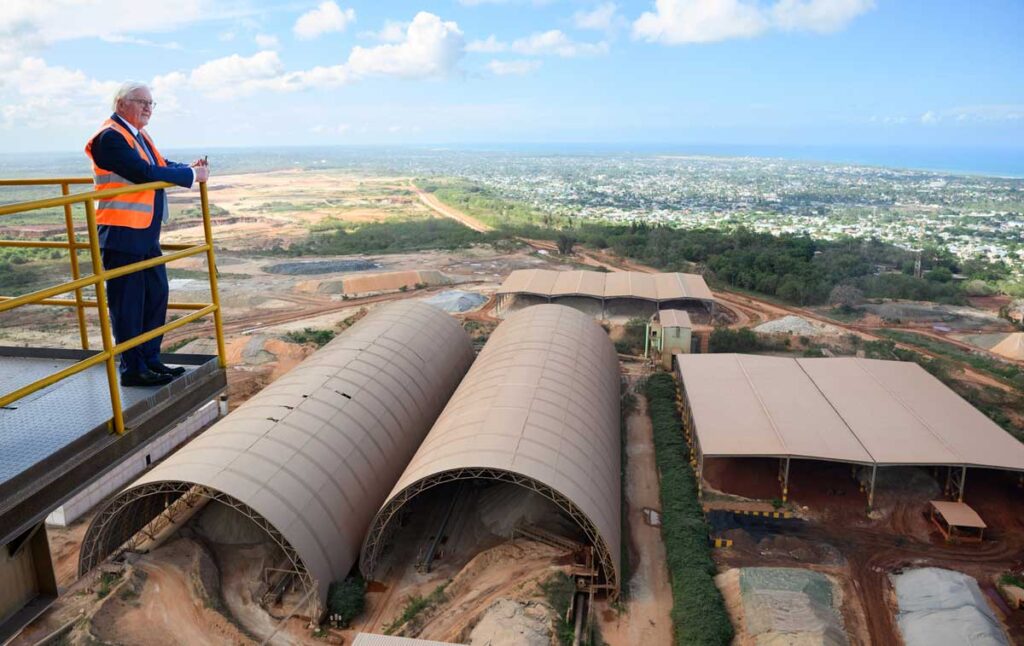
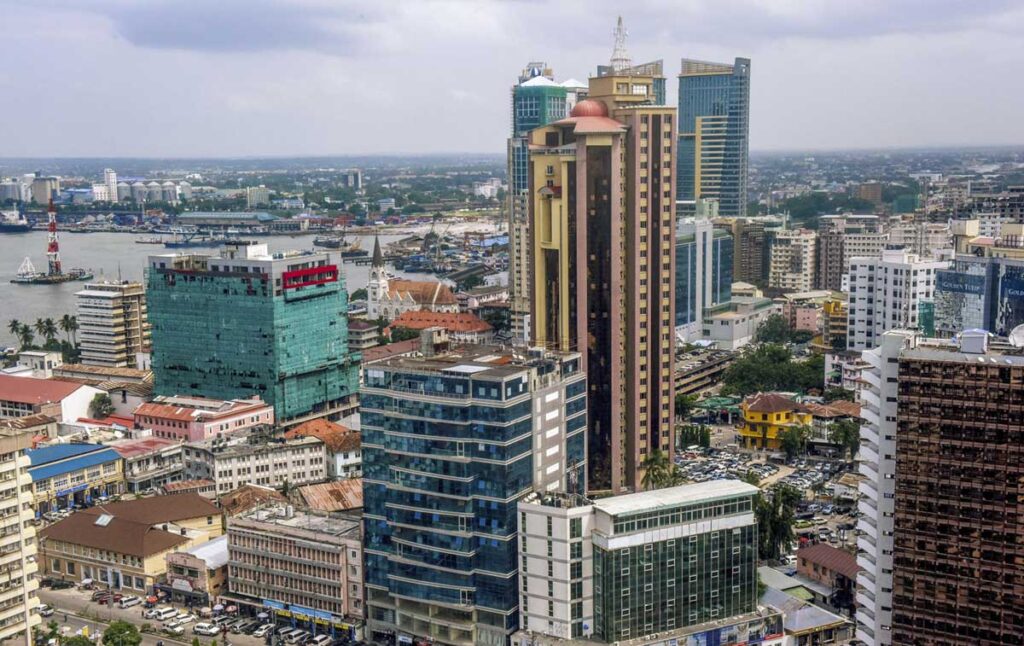
Dar es Salaam captures this continental story especially well. It is one of Africa’s most dynamic urban regions with a commercial gateway, a logistics hub and a city with substantial economic potential. At the same time, it can be viewed as a case study of how cities become magnets for opportunity while struggling to provide the housing, land governance and public services needed to sustainably absorb growth.
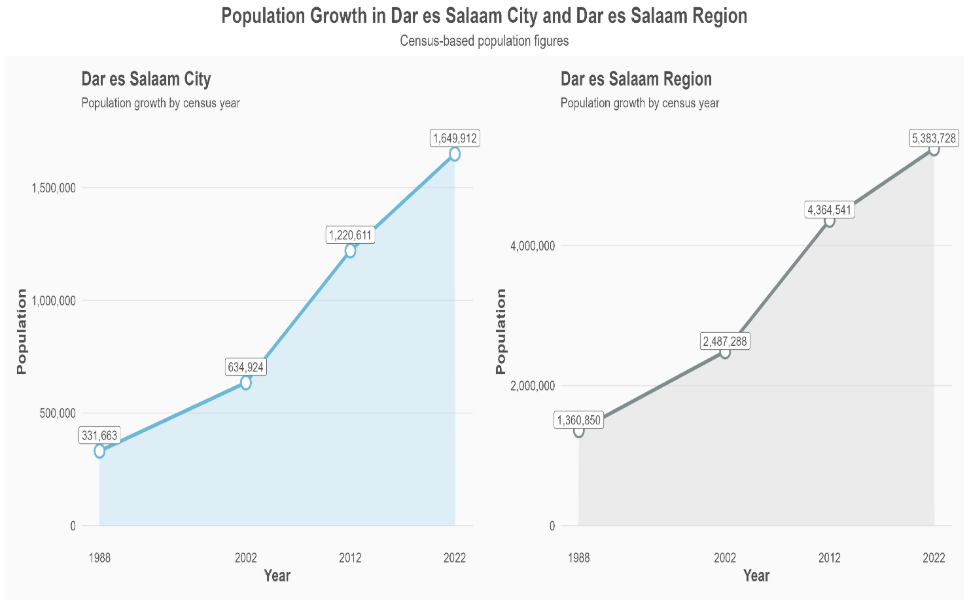
As Figure 1 shows, a total of 5,383,728 people were recorded in the Dar es Salaam region in 2022, up from 4,364,541 in 2012, representing a 23.4% growth over the decade, with an average annual growth rate of 2.1%. The region is also very youthful, with a median age of just 23.1 years, 31.5% of the population under 15, and a marked concentration in the young adult age groups. This demographic profile explains why the city’s migration-to-opportunity story remains so powerful. People, especially youth, continue to come because Dar es Salaam still appears to offer more possibilities than many alternatives.
In some respects, that promise is real. According to Good Governance Africa’s Dar es Salaam City Report, the city’s mean International Wealth Index (IWI), an asset-based index used to measure the standard of living of low- and middle-income households, rose from 41.9 in 1999 to 59.6 in 2022. These are meaningful gains that show that African urbanisation cannot be reduced to a simple story of crisis or collapse. Cities do generate opportunity and progress. Yet the same report also makes clear that this progress has been uneven and insecure.
Even where the city continues to attract people seeking work and advancement, formal labour markets often cannot absorb them. The labour market highlights the gap between promise and precarity. The 2020/21 Integrated Labour Force Survey found that Dar es Salaam had the highest unemployment rate in Tanzania at 20.5%, compared with 9.9% in other urban areas and 7.2% in rural areas. Youth are especially affected, with 56.8% of the city’s long-term unemployed aged 15-35.
As a consequence, poverty remains a prevalent feature of urbanisation. The uncomfortable truth is that, at the heart of many African cities, urban growth can coexist with both measurable welfare gains and persistent insecurity. Nearly 49% of the Tanzanian population still lived below the international poverty line of $1.90 per person per day in 2018, while urban poverty in Tanzania rose slightly from 15.4% to 15.8% between 2012 and 2018. In Dar es Salaam itself, the poverty rate reportedly increased from 4 % in 2012 to 8% in 2018.
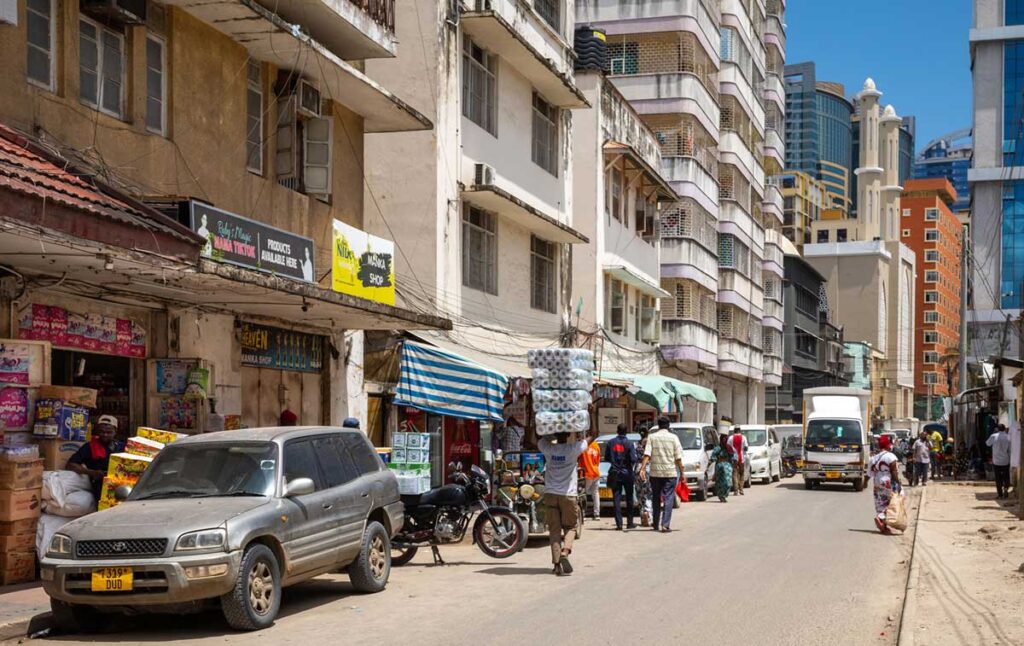
Urban incorporation, then, does not neatly lead to a secure middle-class future for which many strive. More often, it takes the form of unstable inclusion through informal work and unstable incomes. Formal housing then becomes inaccessible to lower-income residents because they cannot afford it. The consequence is that individuals are pushed into peripheral settlements that continue to edge farther and farther from the central or intermediate zones (Good Governance Africa 2025; National Bureau of Statistics 2022).
Land lies at the centre of this wider governance challenge. Tanzania’s urbanisation review notes that the coexistence of formal and informal land systems constrains urban management, tenure security and development. In Dar es Salaam, urban growth has not been fully absorbed through formally surveyed land. In 2022, only 45.4% of buildings in the region were located on surveyed land, while 32.1% were on unsurveyed land and 14.9% on regularised land. Additionally, Dar es Salaam’s urban expansion now extends beyond its administrative or regional boundaries into neighbouring districts, meaning the built-up metropolitan area is spilling over the formal boundary. A large share of the city has developed outside, or within only after the formal land delivery system, serving as an indication of the limitations of planning capacity in the face of rapid metropolitan expansion.
Once settlement happens first and formalisation follows later, everything becomes harder. In Dar es Salaam, metropolitan service delivery remains largely centralised, with the national government leading planning, governance and infrastructure investment. Yet there is little coordination between land use, basic service networks and infrastructure planning, including transport. As a result, road reservations, drainage, sanitation, waste management, public transport routing, and the protection of wetlands and floodplains all become more difficult.
GGA’s report highlights this in the context of solid waste collection, noting that vehicles often struggle to reach informal settlements due to poor road conditions and long travel times. Sanitation reveals the same problem: although the 2022 census records 97% of households as having “adequate sanitation”, only 17.8% use flush toilets connected to a piped sewer network, while many rely on septic tanks, covered pits, VIP latrines and other on-site systems. The city has therefore expanded minimum sanitation access more quickly than it has built the kind of networked, resilient infrastructure associated with a sustainable city (Good Governance Africa 2025).
The World Bank’s Dar es Salaam Metropolitan Development Project Phase II explicitly links the city’s current constraints to rapid, unplanned urbanisation, urban flooding, and weak urban governance. Besides diminishing mobility and liveability, urban sprawl in Dar es Salaam could worsen climate change risks. The government acknowledges the urgent and serious nature of urbanisation and has implemented initiatives, such as the 2016-2036 Master Plan proposed by the Dar es Salaam Metropolitan Authority.
This plan aims to tackle complex urban challenges, address major infrastructure gaps, and promote policy reforms to enhance metropolitan management. However, in 2023, the proposed metropolitan recommendations had not yet been pursued or implemented, and as a result, metropolitan-level infrastructure coordination remains inadequate. The city still holds significant potential, and there remains an opportunity to change its current trajectory, but only if political will becomes the force that drives development and enables government to rise to the occasion.
This is why governance capacity matters so much. Dar es Salaam does not lack plans or projects so much as it lacks sufficient metropolitan coordination and implementation capacity to keep pace with its own expansion. That is a serious structural problem in a city-region whose labour markets, settlement dynamics and transport flows are already metropolitan in scale. Governance remains fragmented even as the urban system has outgrown fragmentary institutions (World Bank 2023).
Seen in this light, the city is not an exception but a case study of a wider African pattern. Cities continue to attract people because they remain centres of hope and economic possibility. But where affordable housing is scarce, serviced land is limited, formal employment is insufficient and urban governance is weak, that hope is absorbed into informality.
The lesson for African governments is not to resist urban growth, nor to respond to it through demolition and exclusion, but to govern it earlier and more effectively: by releasing serviced land, supporting affordable housing, strengthening tenure security, investing in infrastructure networks and coordinating at a metropolitan scale before sprawl and deprivation become entrenched. Dar es Salaam matters because it shows both sides of Africa’s urban future at once: the promise of the city, and the cost of failing to plan for the people who keep coming.

Owami is a junior data analyst intern in the Governance Insights and Analytics programme at Good Governance Africa. She is completing a Master’s degree in e-Science at the University of the Witwatersrand, building on a foundation in International Relations and Political Science. Her research interests focus on political economy with a particular focus on development and elections. She is especially interested in the intersection of governance, economic development, and institutional quality.