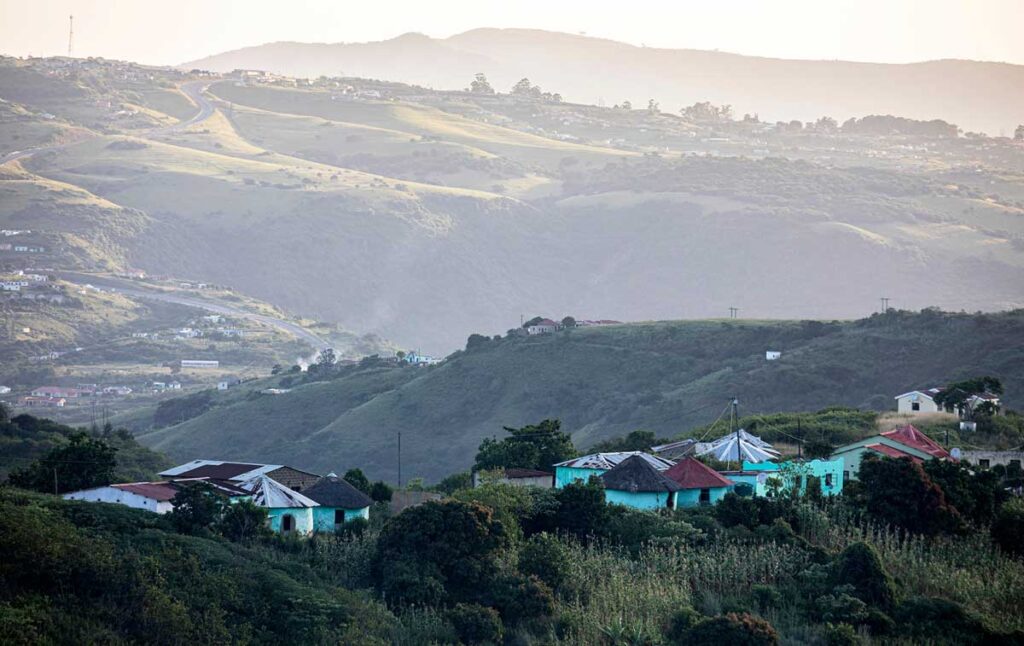
I spent a holiday near Port St Johns in the Eastern Cape more than 20 years ago. Even then, the contradictions of South Africa’s decade-old democracy were in sharp focus. Thirty years in, we’d rightly expect lived reality and governance outcomes to be different.
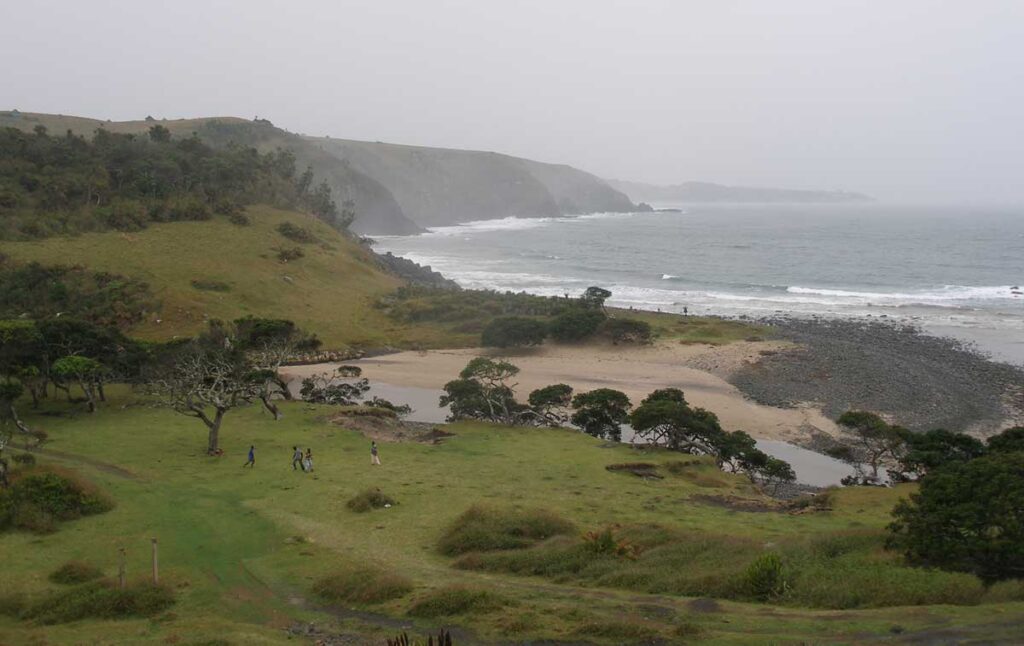
The town lies where the Umzimvubu River empties into the Indian Ocean. Arresting cliffs frame the estuary. Forested hills roll inland across Mpondoland. The scenery is extraordinary. The tourism brochures tell a story of sustainable revenue potential.
The streets tell a different story. Potholes line the main road (and the access road from Mtata, the main city of the former Transkei). Informal stalls cluster around the taxi rank. Waste accumulates in open spaces. The municipal buildings stand quietly above the river mouth, symbols of a state that exists in name but struggles to function.
Port St Johns is not an isolated case. It sits inside a much larger institutional landscape. This “bantustan”, as it was termed during Grand Apartheid, was one of a swathe of areas governed by chieftains who were reduced to puppets of the racist regime. But these chiefs also wilfully derived rent from the apartheid regime and enacted its precepts. In 1997, three years after South Africa ushered in democracy, scholars Ineke van Kessel and Barbara Oomen lamented: “Rather than being phased out as relics of pre-modern times, chiefs are re-asserting themselves in post-apartheid South Africa… this is a surprising outcome of a long liberation struggle.”
Estimates suggest that roughly 18 million people (nearly one-third of the population) live in territories today that were once bantustans. Many are heavily dependent on state welfare grants, and children have limited access to quality education.
It’s not only the chiefs and their access to rents that have persisted into the post-apartheid domain; it’s also the inequality, poverty and insecurity. The numbers explain a great deal.
The Port St Johns municipality is home to an estimated 179,325 residents and more than 30,000 households, according to the 2022 census. Yet only about 24% of households have piped water, 19% have flush toilets, and less than 19% receive weekly refuse removal. Electricity access is high at roughly 92%, largely due to national electrification programmes. Reliability remains an open question, though.
Port St Johns is a Category B4 “mostly rural” municipality within the OR Tambo District.
The municipality has a tiny local tax base. The formal economy is limited, and subsistence agriculture dominates much of the rural hinterland.
Municipal finances, therefore, depend overwhelmingly on transfers from the national fiscus. The municipality itself acknowledges this dependence; its annual reports note that it relies heavily on national and provincial grants to perform its basic functions.
When revenue is thin, services suffer. Infrastructure deteriorates. Development stalls, especially as tourism potential can only be tapped through stronger infrastructure, higher service quality, and greater availability.
The roots of this problem lie in the institutional architecture of the bantustan system. The apartheid government deliberately constructed these territories as labour reservoirs for the gold mines of the Witwatersrand rather than viable economies. The Bantu Authorities Act of 1951 entrenched rule through state-recognised chiefs and tribal authorities in the reserves.
The Tomlinson Commission of 1954 warned that the reserves could not sustain their populations economically without massive state investment. Those warnings were ignored. The result was predictable: fragmented governance, weak economies and extreme poverty across the homeland territories. Democracy dismantled the political structure of the bantustans, but it did not erase their institutional logic.
Scholars such as Aninka Claassens, Hendrik van Kessel, and Barbara Oomen (mentioned above) have documented how these structures continue to shape rural governance today. Claassens’ work is particularly important. In Land, Power and Custom (2008), she shows how post-apartheid land policies often reproduced the authority structures created under apartheid. Instead of empowering local citizens, they often reinforced the power of chiefs and traditional councils over communal land.
The most controversial example was the Communal Land Rights Act (CLRA), Act 11 of 2004. The CLRA attempted to formalise communal land tenure by transferring land administration powers to traditional councils. Critics argued, however, that this effectively entrenched apartheid-era tribal boundaries and undermined democratic accountability.

Claassens and her colleagues argued that the Act risked strengthening “zones of chiefly sovereignty” in which ordinary residents had little voice over land decisions. Communities challenged the law. In 2010, the Constitutional Court struck it down in the Tongoane judgment, ruling that parliament had passed the legislation incorrectly and without adequate consultation.
As striking as it was to see communities themselves objecting, striking down the law did not solve the deeper problem, as the governance vacuum persists.
Land rights in many former homeland areas remain insecure and ambiguous. Authority is often divided between traditional leaders, municipal councils and national departments.
Port St Johns illustrates how this fragmentation plays out on the ground. The Wild Coast has become a focal point for proposed mining projects, particularly along the titanium-rich coastal dunes of Mpondoland. Mining companies often negotiate directly with traditional authorities and the national Department of Mineral Resources. Local municipalities frequently find themselves on the sidelines, as do affected communities.
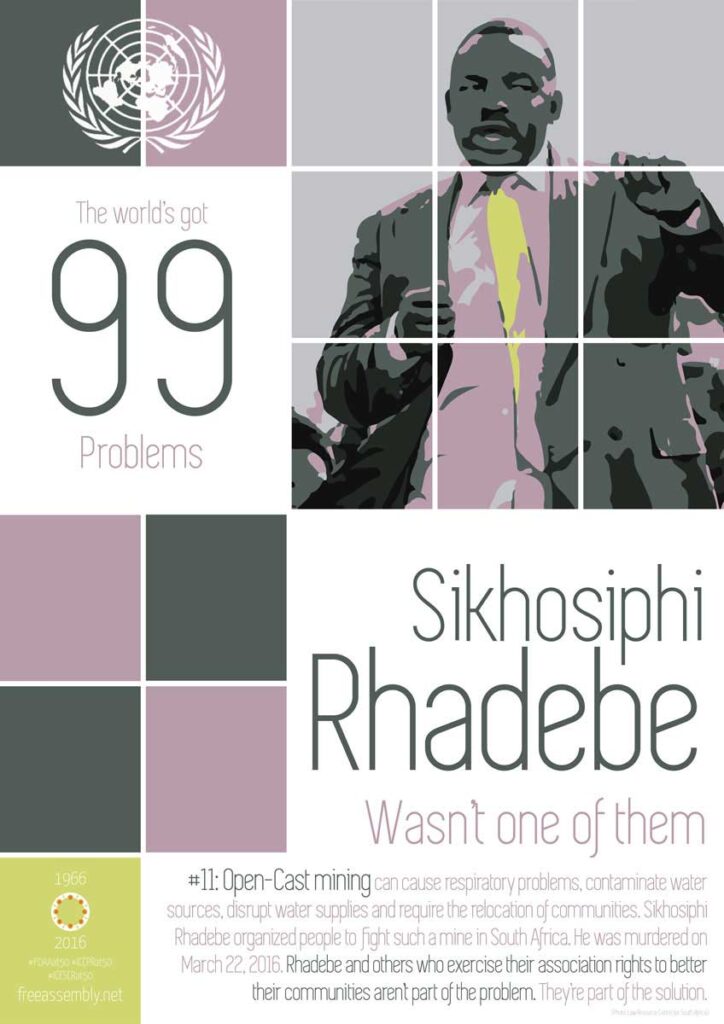
While communities have successfully resisted some of these projects, which would directly undermine future ecotourism revenue potential, they have paid a heavy price. In early 2016, for instance, unknown attackers impersonating policy officers assassinated activist and then chairperson of the Amadiba Crisis Committee, Sikhosiphi Bazooka Rhadebe. Rhadebe had stood up against plans to mine mineral sands at Xolobeni along the Wild Coast.
When economic decisions occur outside municipal structures, local governments lose both influence and potential revenue. Yet municipalities are still expected to deliver services to those same communities. This is not to absolve incompetent officials, but the basic incentive structure to generate service delivery performance has become distorted.
Short-term extraction deals may promise royalties or jobs, but they rarely build durable local economies. They also risk undermining alternative development paths. Along the Wild Coast, those alternatives are obvious. Tourism potential is enormous. Port St Johns is sometimes described as the “jewel of the Wild Coast”. Its biodiversity is remarkable, with more than a thousand plant species recorded in the surrounding landscape.
But tourism depends on functioning institutions, infrastructure and high-quality (and coverage) service delivery. Visitors need reliable roads. Waste management must work. Infrastructure must be maintained. Local businesses need regulatory certainty. Without those conditions, tourism struggles to scale or prove a viable catalyst for broad-based development.
Municipalities, therefore, remain trapped in a vicious cycle. Weak local economies produce weak municipal revenues. Weak revenues limit service delivery. Poor services discourage investment. Without investment, employment prospects dissipate. Talented young people who could contribute to the economy or provide capable municipal management leave for the bright lights of the city. The cycle repeats. The latest governance data reinforces this pattern.
Across South Africa, municipalities located within former homeland territories consistently perform worse on service delivery indicators than municipalities outside those areas (like the Western Cape, which has no former homelands). The gap persists despite decades of fiscal transfers and administrative reforms.
This should force a rethink of the policy debate. Much of the discussion about local government focuses on corruption, coalition politics or administrative capacity. These issues matter. But they do not address the structural constraints that shape development in former homeland regions.
Institutional design and inherited historical structures still matter. This is not to say that they are fully deterministic – the Western Cape inherited a better hand but, on average, has done a better job with what it inherited than has most of the rest of South Africa.
Claassens and other scholars have long argued that rural development requires secure land rights and genuine local accountability. Communities must have real authority over land decisions, and municipalities must be central to economic planning, not functionally subservient to chieftaincies.
Without those reforms, local government in places like Port St Johns will remain largely administrative. The national government will distribute grants, which may reduce the risk of political revolt, but the municipality will struggle to maintain infrastructure and therefore find it difficult to attract investment to drive ecologically sustainable growth.
Yet the potential is undeniable. The Umzimvubu flows through one of the most spectacular landscapes in southern Africa. Tourists still arrive, if only a few. The endowment of natural beauty is prominent. But without institutional coherence and a courageous dismantling of the worst manifestations (and perpetuations) of the bantustan system, potential will be corroded.
Until South Africa confronts the governance legacy of the former homelands, particularly the unresolved question of land rights in communal areas, the development prospects of towns like Port St Johns will remain constrained.

Dr Ross Harvey is a natural resource economist and policy analyst, and he has been dealing with governance issues in various forms across this sector since 2007. He has a PhD in economics from the University of Cape Town, and his thesis research focused on the political economy of oil and institutional development in Angola and Nigeria. While completing his PhD, Ross worked as a senior researcher on extractive industries and wildlife governance at the South African Institute of International Affairs (SAIIA), and in May 2019 became an independent conservation consultant. Ross’s task at GGA is to establish a non-renewable natural resources project (extractive industries) to ensure that the industry becomes genuinely sustainable and contributes to Africa achieving the Sustainable Development Goals (SDGs). Ross was appointed Director of Research and Programmes at GGA in May 2020.