The systemic rivalry between major global economies to reshape the organisation of critical mineral value chains is presenting serious diplomatic challenges and opportunities to mineral-rich African countries.
Over the past few years, while there has been increasing policy action on critical minerals, this has taken place in a context of growing scepticism about the role of multilateral institutions in addressing collective-action problems such as climate change.
For example, International Monetary Fund (IMF) research has demonstrated that in the absence of improved multilateral cooperation, there is a real risk that continued geopolitical fragmentation in critical mineral markets would delay the global energy transition by driving up prices for renewable energy technologies.
In this way, South Africa’s G20 presidency and its focus on critical minerals represent a microcosm of the challenges facing collective climate action in an era of growing geopolitical competition.
Considering these trends, this article will discuss the growing geopolitical challenge posed by critical minerals, with a focus on South Africa’s G20 presidency and other major multilateral processes such as the G7, COP30, and UNEA-7. The article will then conclude by reflecting on the implications of these policy processes for African countries and the future of multilateral cooperation on minerals.
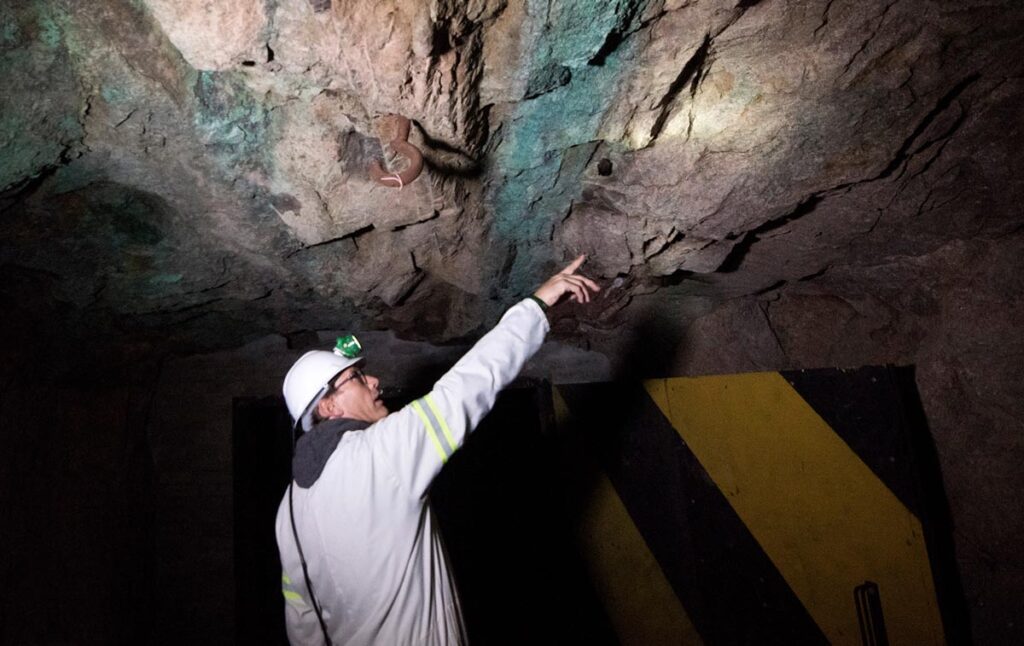
Building on discussions on minerals in previous G20 presidencies, the South African government set the agenda for its tenure by highlighting critical minerals as a priority area.
Speaking at the World Economic Forum early last year, President Cyril Ramaphosa reiterated the importance of critical minerals for the country’s G20 agenda, stating that the country would “use this G20 to champion the use of critical minerals through a programme of green industrialisation and as an engine for growth and development in Africa and the Global South.”
As part of its formal agenda, the presidency committed itself to delivering a G20 high-level expert framework on critical minerals with the aim of promoting value addition close to source and the development of low-carbon manufacturing value chains.
Adopted in November last year, the G20 Leaders’ Declaration welcomed the G20 Critical Minerals Framework as a “voluntary, non-binding blueprint to ensure that critical mineral resources become a driver of prosperity and sustainable development.”
The framework emphasises principles such as support for open and non-discriminatory trade within the rules of the multilateral trading system to avoid the fragmentation of mineral markets (at the time of writing, the framework had not yet been made publicly available, but the author had an opportunity to study the final version).
Outside the G20 process, policy efforts to reshape mineral governance have also gathered noteworthy momentum at the regional and national levels, with the African Union (AU) announcing its African Green Mineral Strategy and South Africa announcing its Critical Minerals and Metals Strategy last year.

Apart from multilateral engagements on critical minerals, South Africa also used the G20 summit to build bilateral partnerships in this area.
For example, delegations from the European Union (EU) and South Africa met on the sidelines of the summit to sign a Memorandum of Understanding for establishing a Strategic Partnership on Sustainable Minerals and Metals Value Chains.
The central objective of this partnership is to identify and develop mineral projects of mutual interest and to undertake joint work to support investment opportunities in South Africa along the minerals value chain, including value addition and beneficiation.
The partnership was one of the key outcomes agreed to earlier in the year at the EU-South Africa Summit, where the EU pledged $4.7 billion towards South Africa as part of a new clean trade and investment partnership.
During the G7 Summit in Canada in June last year, member countries agreed to a G7 Critical Minerals Action Plan that focuses on diversifying production, supporting responsible investment, fostering innovation, and creating local value.
The plan reiterated the G7’s support for building partnerships with mineral-rich countries, such as South Africa, stating that members “are committed to deepening our cooperation with mineral-rich emerging markets and developing country partners.”
South Africa also attended the summit, where Ramaphosa participated in an outreach session focused on critical minerals, among other related policy topics.

Speaking on the alignment between the overall theme of the session and South Africa’s G20 presidency, he stressed the importance of value addition, saying that “those who want to invest in our minerals, should know up front that we are not only looking forward to them extracting minerals, but also to value chain additions or advancements in the form of beneficiation…”
As for the US presidency of the G20 this year, the US has presented a much narrower agenda than its predecessor, identifying three basic themes, namely “removing regulatory burdens, unlocking affordable and secure energy supply chains, and pioneering new technologies and innovation”.
Given these priorities, the topic of critical minerals may provide an area of potential overlap and cooperation with South Africa’s presidency.
As Senior Fellow at the Council on Foreign Relations Heidi Crebo-Rediker has noted, despite the animosity between South Africa and the US, the “irony is that under the surface, South Africa’s G20 has laid groundwork on a few issues Trump claims to care about: fixing a broken sovereign debt system and securing more resilient critical minerals chains.”
The seventh United Nations Environment Assembly (UNEA-7), held in Kenya in December last year, saw two major developments regarding critical minerals.
First, Colombia and Oman put forward a draft resolution aimed at making mineral value chains more responsible and calling for the establishment of an expert group to consider options for binding international instruments to support multilateral action on critical minerals.
However, amid strong divisions and the entrenched opposition of some governments, the member states ultimately agreed to adopt a more modest proposal to host dialogues aimed at enhancing cooperation on critical minerals.

Second, on the sidelines of UNEA-7, the UN launched its task force on critical energy transition minerals, following the recommendations made by the UN Secretary-General’s Panel on Critical Energy Transition Minerals in 2024.
The task force, jointly chaired by several UN agencies, will provide important technical support to countries and represents a growing global consensus on the need to improve mineral governance across value chains.
So, what is the future of critical minerals in multilateral processes?
First, amid growing geopolitical tensions, escalating trade disputes, and scepticism about the effectiveness of multilateralism, the South African presidency should be commended for delivering a consensus declaration and a framework on critical minerals.
However, the process also demonstrated the inherent tensions in seeking to forge a common position on issues where competing national interests and divergent definitions of “criticality” among member states undermine more ambitious collective action.
For example, it is difficult to see how G20 member countries’ commitments to in-country value addition can be easily reconciled with certain international, legally binding rules that limit policy space and options for mineral-rich developing countries.
In addition, while the topic of critical minerals provides an opportunity for policy continuity and cooperation with the US, this likelihood will be undermined by South Africa’s effective disinvitation to G20 events by Trump’s government in 2026 and by his country’s more security-oriented, transactional approach to mineral partnerships.
For instance, when finance ministers from the G7 and other mineral-rich economies met in Washington early in January this year to discuss mineral partnerships and policies, South Africa was not included.
Second, while the South African government should be praised for building bilateral mineral partnerships with actors such as the EU, the success of any such cooperation will ultimately depend on how the parties can compromise and move from negotiation to implementation.
Jointly implementing such mineral partnerships will not be without its challenges. Research by the Business and Human Rights Centre on the EU’s strategic minerals projects in partner countries has revealed an “inconsistent approach to key human rights policies and potentially serious gaps in local engagement and respect for public participation and meaningful engagement with communities and indigenous peoples.”
Third, despite the growing momentum behind more just action on critical minerals, most multilateral processes have delivered only relatively modest results thus far.
Speaking on the absence of critical minerals in the outcome of COP30, Nafi Quarshie, the Africa Director at the Natural Resource Governance Institute, said in a blog post last December that “Africa won’t let this debate fade away. Minerals may not appear in [last year’s] COP30 decision, but they are central to a just transition, and they will remain on the agenda until governments treat this as both a climate and development imperative.”
Expressing similar disappointment with the diluted final resolution at UNEA-7, Policy and Public Affairs Principal at the International Council on Mining and Metals John Lindberg said afterwards that this “is the frustration of these gatherings: good ideas are culled for the sake of consensus… With minerals and metals underpinning every facet of modern life, the role of multilateralism has never been clearer. Yet UNEA-7 again exposed the practical weaknesses of these processes…”
From these policy outcomes and processes, it is evident that 2025 brought the central challenge of critical minerals to the surface for the future of multilateralism.
In the absence of improved diplomacy and multilateral cooperation on critical minerals, the unilateral, inward-looking policy actions of many mineral-rich countries may risk undermining the global value chains on which the energy transition depends by fuelling securitisation, protectionism, and fragmentation.

Adrian Joseph
Adrian Joseph is a research fellow in the Climate and Natural Resources Programme at the South African Institute of International Affairs (SAIIA), where he works on the issue of critical minerals. Before joining SAIIA, he spent time at the Brenthurst Foundation as a Machel-Mandela fellow and is a former Konrad Adenauer Stiftung scholar. He holds a Bachelor of Arts Honours Degree in Philosophy, Politics and Economics from the University of Cape Town.