Most urban planning for Africa’s mushrooming cities has focused on megacities and high-value port-and-transport corridors, but medium-sized cities, which accommodate a quarter of the continent’s urban population, should play a pivotal role in development.
Urbanisation is proving to be the most dynamic determinant of Africa’s future prospects, with projections that African city dwellers will double from 700 million to 1.4 billion by 2050, outnumbering their peers in North America (617 million), Europe (449 million), the Middle East (294 million), and Oceania (32 million) combined.
According to the report Africa’s Urbanisation Dynamics 2025 by a consortium including the African Development Bank Group (ADBG), the UN’s Organisation for Economic Co-operation and Development (OECD), and the Cities Alliance, while two-thirds of Africa’s urbanisation will occur in large cities, the number of medium-sized cities of 100,000 to one million inhabitants “is predicted to increase from 710 to 1,167 by 2050”.
Their research tool, Africapolis, is “based on combining demographic sources, satellite and aerial imagery, and other cartographic sources… [and] maps of 11,139 agglomerations of 10,000 people or more in 54 countries. It includes historical demographic data from 1950 to 2020 and spatial boundaries for every agglomeration in 2015 and 2020,” the report says.
Meanwhile, small-town Africa is slowly disappearing, with the percentage of Africans living in municipalities of 10,000 to 100,000 inhabitants expected to fall from 29% to 19% between 2020 and 2050, despite a population increase from 209 million to 275 million in absolute terms.
The picture is, however, complicated by the fact that while some smaller towns are simply dying because they fall outside new transport corridors, such as highways, which bypass them, or because their reasons for existence, such as mines or rail junctions, are no longer functioning, many are simply being absorbed into medium-sized conurbations.
Populations in secondary cities will increase from 183 million in 2020 to 310 million people in 2050, but their relative share of the continent’s total population will decrease from 26% to 22%, as they outgrow their category or get swallowed by megacities, albeit with strong average annual growth that almost matches that of large cities.
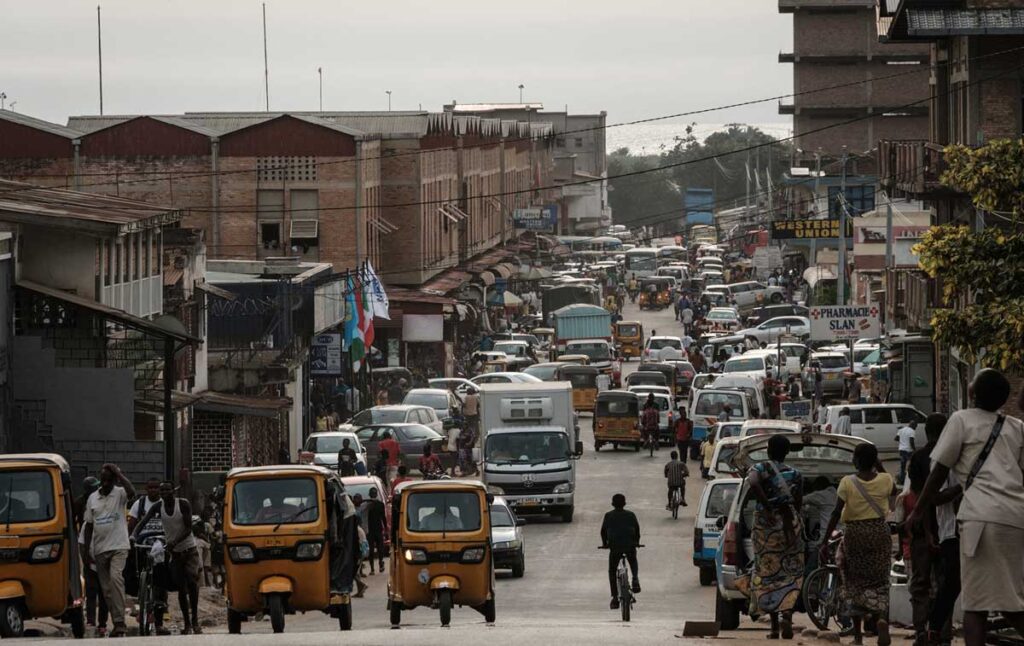
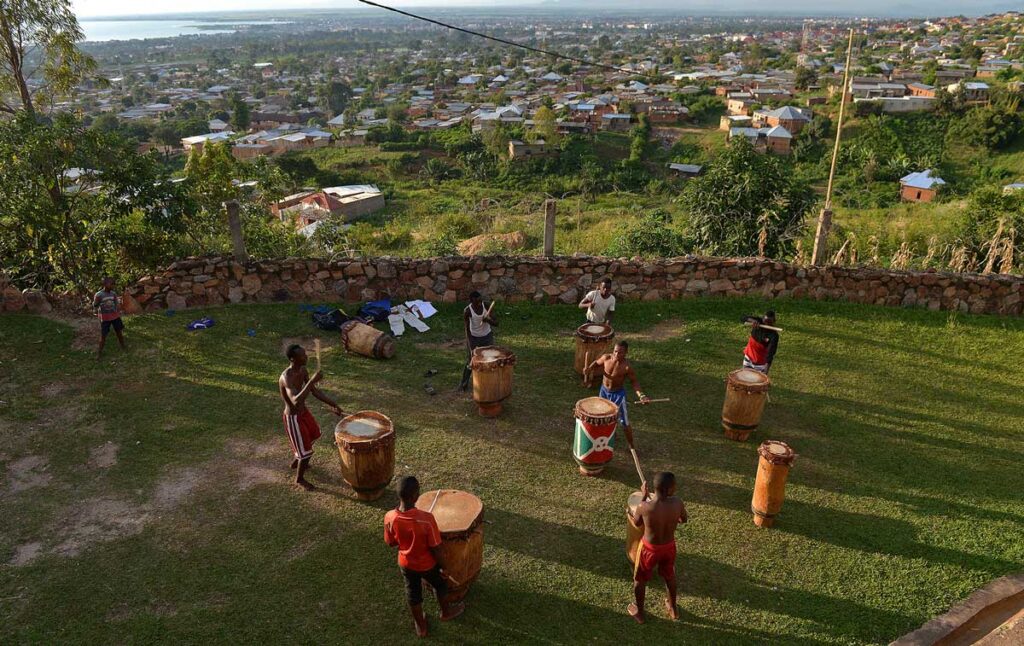
In five of the 10 countries with the fastest-growing mid-sized urban sprawls – Uganda (5.8% per annum), Burkina Faso (5%), Ethiopia (4.5%), Eswatini (4.5%) and Somalia (3.9%) – “this decline will occur because they will have outgrown the medium category and surpassed the one-million-resident bar to become large cities,” according to the report. In addition, in densely populated countries like Burundi, Rwanda, and Gambia, the number of secondary cities is declining due to the fusion among them.
A startling example is that of the medium-sized cities of Mbale in eastern Uganda and Kisumu in western Kenya, which are projected to be seamlessly merged by 2050 and, in turn, blend into Nairobi, the lynchpin of Africa’s largest megacity that will spill across the border into Tanzania to connect with Mwanza, producing a continuous tri-country footprint that the report claims could reach a jaw-dropping 70 million people.
“In the other five countries, the share of the urban population living in intermediary urban agglomerations will increase. For instance, in Lesotho, the share of intermediary cities in the total urban population will jump from 47% in 2020 to 85% by 2050 and from 15% to 35% in Malawi.”
Despite the fact that, based on spatial imagery, most urban growth occurring in African cities appears to be in urban centres with populations between 300,000 and 500,000 and that they “play a critical intermediary role in regional value-adding, logistics supply chains and subnational levels of education, governance, community and social services delivery and economic development”, for decades Africa’s secondary cities have not been at the forefront of urban policy development and research, and good data and information are unavailable or difficult to obtain.
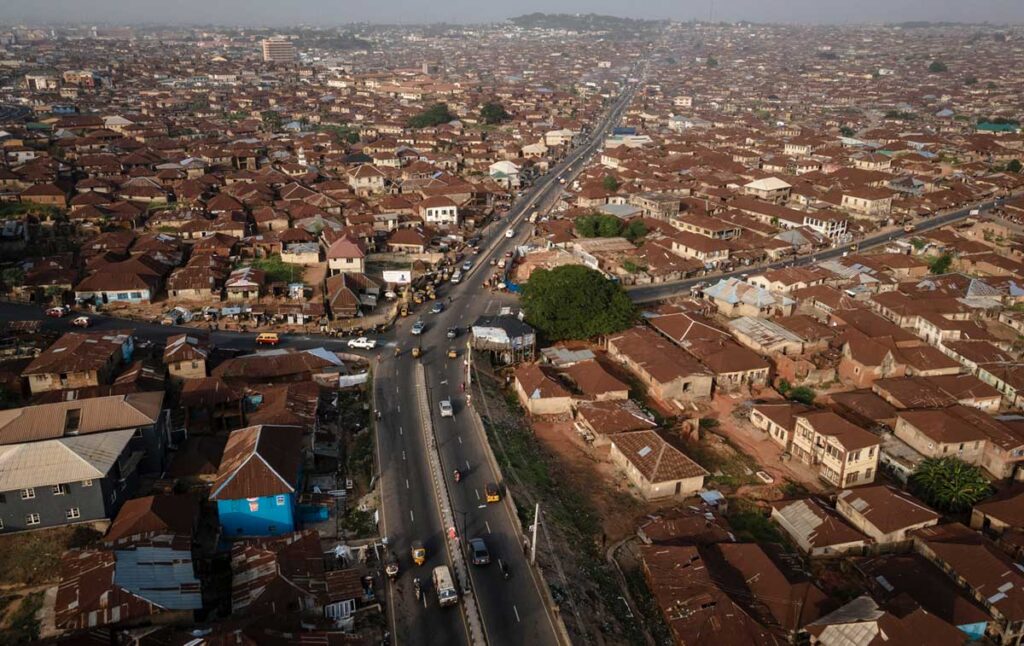
That’s according to The Dynamics of Systems of Secondary Cities in Africa (2022), a book produced by the ADBG, Cities Alliance, and Swiss Agency for Development and Co-operation, which provides eight case studies that take a deep dive into the (mal)development of the mid-sized cities of Cape Coast in Ghana, Gabès in Tunisia, Huambo in Angola, Dire Dawa in Ethiopia, Mombasa in Kenya, Ibadan in Nigeria, ToubaMbacké in Senegal, and Gqeberha (formerly Port Elizabeth) in South Africa.
The book notes that these cities generally have poor urban governance and management systems, with many lacking basic infrastructure, quality education, and community and health services, and having unreliable urban and regional logistics systems. “While many African secondary cities have dynamic local economies, they are primarily consumption-driven, with a sizeable informal employment sector,” the researchers found. “Their peri-urban areas tend to be highly dispersed, with inhabitants engaged in semi-subsistence activities.”
One of the key characteristics of many secondary cities is that they act as reception centres for rural-urban internal migrants and, especially in border cities, for refugees and as transmission belts for many of these people to large metropoles, whose often transient nature contributes to slumland sprawl.
“The case study of Huambo illustrates the many challenges that secondary cities affected by conflict and civil war have in recovery,” the researchers write, while Touba Mbacké was a good example of a secondary city facing development challenges from climate change and the impact of international tourism as a significant Islamic religious centre.
The Kenyan port of Mombasa, one of East Africa’s major gateways, is facing significant development challenges, including population growth and employment-related social issues. “It is a city undergoing significant transformation as it redefines itself,” the study states, while the South African port of Gqeberha is likewise experiencing transformation issues, but in its case, they are associated with the decline of heavy industries as its once-definitive automotive sector shuts down.
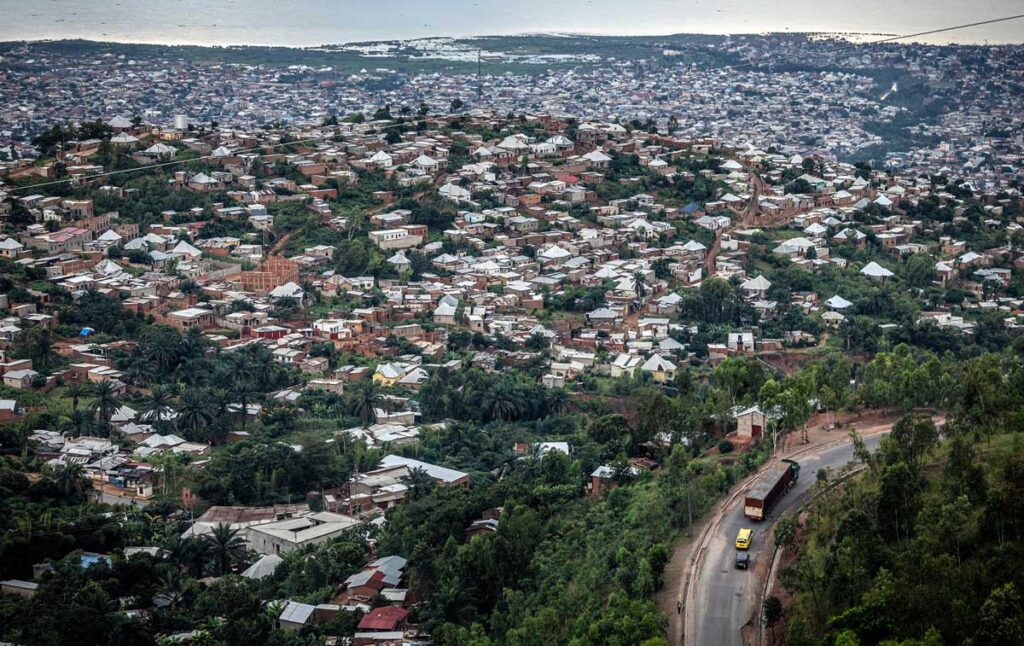
The studies detailed in the book were consolidated into a series of key lessons around secondary cities. Rooted in the colonial dispensation, which usually developed only the capital and key extractive routes and relegated secondary cities in the provinces to minor administrative roles, the result was that in just about all African countries, despite post-independence administrative reforms, metropolitan areas enjoy primacy in policy and planning while urban hinterlands languish.
The entire country’s development is thus skewed, and megacities become more attractive destinations for internal migrants than underserved intermediary cities: in 27 out of 54 countries, more than 30% of people live in the metropoles.
As a result, many challenges for medium-sized cities arise out of the centralisation of political power, which creates dependency on the political will and control of development finance of national government.
The researchers found that a key impediment to improving development planning and service delivery in secondary cities was “the lack of population, economic, social, land use, and infrastructure data and information, with national data not being disaggregated so as to be useful to local officials”.
The lack of medium-city autonomy had a knock-on effect in several areas, the researchers found, notably in a “failure to improve revenue generation; reform financial and budget management practices; and address financial mismanagement, wasteful expenditure, insolvency, and corruption.” This made secondary cities financially dependent on their metropoles, economically uncompetitive, delinked from value-chain networks, unable to attract investment and business, and prey to infrastructural and environmental decline.
“Decentralisation and devolution are necessary to empower secondary cities to be more autonomous, responsible and accountable in developing and delivering on localised approaches to policy and economic and financial management for dealing with urbanisation problems,” the book concluded.

Michael Schmidt is a veteran investigative journalist who focuses on African affairs, a best-selling non-fiction author, and a human rights rapporteur with field experience in 49 countries. He has reported from the bowels of many corporate and artisinal mines, and writes here in his capacity as an analyst for the Pan-African Justice Initiative (PAJI).