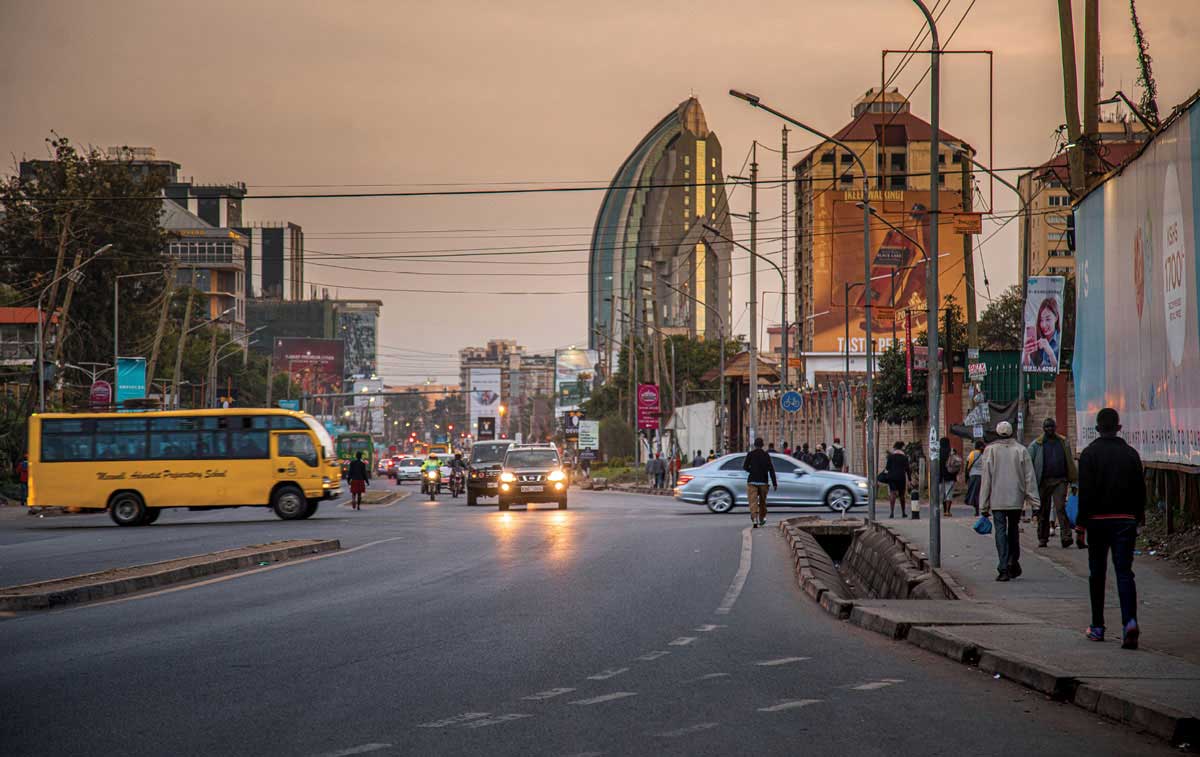
It has been nearly 10 years since Johnson came to Nairobi, Kenya’s capital city, from his rural birthplace in Makueni County to find work. Every day, residents of the countryside flock to cities such as Nairobi and Mombasa in search of a better life.
UN-Habitat says Kenya’s urbanisation rate is high, estimated at approximately 3.7% to 4.4% annually, which creates a range of problems, including spatial constraints, poverty, insecurity, and poor access to basic services, factors that often lead to social discontent.
After finding a job, Johnson’s hopes of becoming an integral component of Nairobi’s ecosystem were dashed after finding out, according to him, that the city’s policies are designed to favour the rich over social equity.
After living in Kibera, Africa’s largest informal settlement, for about five years, he relocated to Umoja, a working-class township. “Umoja is much better than Kibera, but my dream is to live in Kilimani; then I will feel that I really live in Nairobi,” he told Africa In Fact.
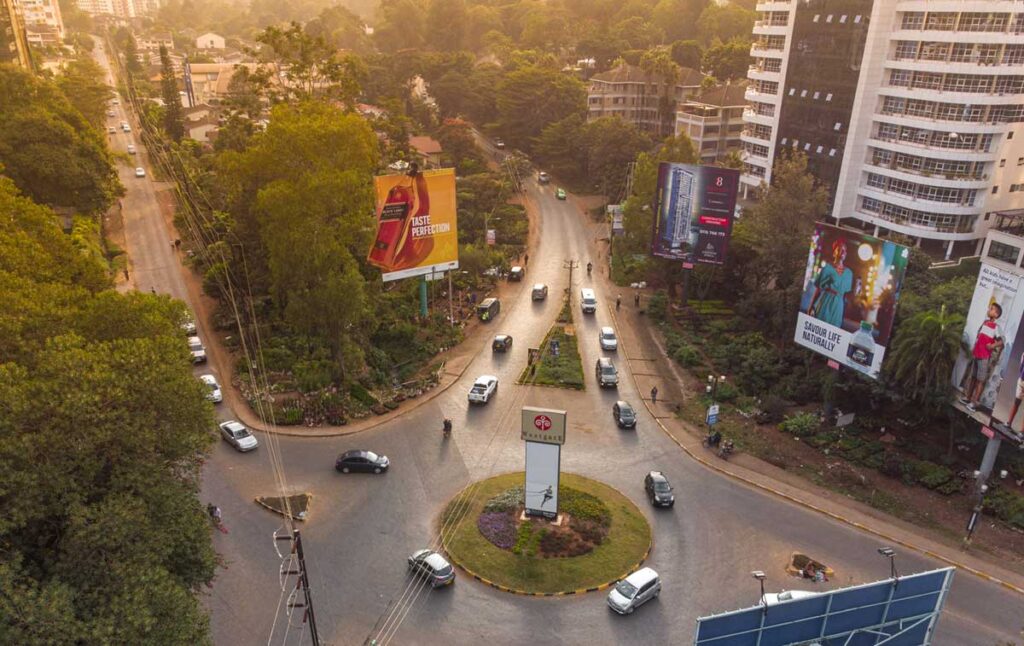
But this remains a dream because the prices are not for the faint-hearted. The starting price for a one-bedroom apartment in “leafy” surroundings is 7.5 million Kenyan shillings (about R950,000 or $58,000). “Definitely not for people like us. In my view, Kilimani is a world apart, and people who live there own this city,” Johnson, an IT engineer, said.
Formally a serene and low-density suburb originally established by British colonialists in the mid-20th century as a “whites-only” residential area, Kilimani is now a high-density commercial and residential area. First-class apartments in high-rise buildings are emerging, standing side by side with trendy and exotic restaurants, lounges, boutiques and spas, where deep-pocketed foreigners and Kenyans rub shoulders and live la dolce vita.
A real estate manager, Rose, told AIF that Nairobi was fast becoming a city of the rich. “Our investment focuses on the high-end market because that is where most of the money is,” she says. “At least two-thirds of our units are already bought, mostly by wealthy foreigners and Kenyans, while others are rented by expatriates, who pay six months’ rent in advance.”
According to industry watchers, Nairobi is now included among the top five African cities for attracting new millionaire homeowners. But Maggie, a former government employee turned real estate investor, “disqualifies” Nairobi as one of the cities that would achieve the UN Sustainable Development Goal 11 (Sustainable Cities and Communities).

“I’m not being Afro-pessimistic, just pragmatic. We are not even close, and it is less than five years to the deadline,” she said. “It’s not for us (housing investors) to ensure that the city becomes a place for everyone to live, poor and rich. It’s the government’s mission. We deliver high-end housing, take care of low-end housing, invest in sustainable infrastructure, provide adequate urban planning, a clean environment, and above all, create economic opportunities for the poor.”
She said unless the government itself did that, “Nairobi will remain a place where rural people come and work and go home during holidays, and they, alongside the urban poor, will never belong here, which is sad because cities are built for everyone to live in, but, unfortunately, they are fast becoming hubs for the rich.”
With demand for high-end housing rising, investors have understood that injecting their cash in the low end of the market was a waste of time and resources, Maggie said.
As Kecia Rust, executive director at the Centre for Affordable Housing Finance in Africa, told AIF, “At the most obvious, developers in Nairobi believe that high-end housing offers a larger margin from which they can draw their return, because the buyers are less price sensitive and don’t mind if the price is a little bit high. But ultimately, experience shows that they are mistaken in this preference.”
Rust said the reason why this perception persisted in the city was that, across the board, housing was difficult to deliver. “At each stage in the housing delivery value chain, challenges slow the process, require workarounds, and deliver surprises, all of which increase costs. Land rights are difficult to secure, infrastructure is lacking and slow, there are no roads, developers can’t access construction finance, and buyers can’t access mortgages; the cost of capital is high.”

She added, “It doesn’t matter whether one is building expensive or affordable housing; the process is difficult. To make it worthwhile, the developer needs to be able to price for this risk.”
According to Rust, on the demand side, low-income people in Nairobi also have incomes that are poorly recognised by lenders because they earn informally and erratically from multiple sources. “They cannot provide a simple payslip to demonstrate affordability, and lenders don’t have the systems in place to evaluate them without that. What this means is that the majority of housing in Africa is built by households themselves, incrementally, financed with whatever money they have at the time. This means that, ultimately, the build is more expensive and of poorer quality. The system is inefficient.”
Rust said governments needed to make the system easier: “Prepare land so that it is ready for transfer, perhaps offering serviced sites, invest in bulk infrastructure, and address macroeconomic factors to bring down the cost of capital,” she said.
“At the local level, municipalities can provide accelerated approvals and reduced fees, especially targeted at affordable housing delivery. The private sector needs to develop its products and services to respond to the character of demand – households with multiple income sources, many of them informal. This might mean that instalment sale instruments (rent-to-buy) are better.
“A sort of industrialised incremental housing could also work. Lenders need to structure their products to manage the titling constraints that exist, to offer stepped products for developers building their track records.”
But while Kenya’s housing discussions have long been focused on affordability, in the past two to three years, the debate has shifted to so-called “dead capital”. “It’s a trap and a waste of resources, and most of all an unproductive investment,” Nixon, a bank teller, told Africa in Fact. “I know a person who has two substantial rural houses but is struggling to sell one to buy a modern house in a city and rent it out, all due to a combination of factors, including poor infrastructure.”

Nixon said if he were the government, he would advise people to think twice before spending thousands of dollars to build houses in rural areas. “It poses multiple and serious challenges; there is no economic value at all. Imagine if these mansions were built and rented out in the city; everybody would gain, from the owner to the tenant and the taxman.”
However, Rust said she did not believe this was a pattern that could be addressed via policy, as it was “simply a household’s own set of choices”. “On the other hand, I do think it is generational, and that ultimately, the investment effort will shift to urban areas. I think one area that does need more policy attention is rental housing in urban areas for those people and families who move between the two spaces [rural to urban]. Rental is significant, and in high demand, and yet few governments recognise this tenure form in policy.”
However, despite the multiple challenges facing African cities, mostly driven by rapid urbanisation and inadequate policies, there are signs that this trend is slowly but surely reversing, from being sites of “survivalist urbanisation” to becoming engines of sustainable, inclusive growth.
“On the one hand, cities are dealing with serious impacts like extreme heat, energy crises, floods, toxic air and contaminated water, all of which drive job losses, intensify the cost-of-living crisis, and elevate the risk of displacement for vulnerable communities,” says Nairobi-based Njenga Muchekehu, Deputy Regional Director for Africa of C40, a global network of nearly 100 mayors from the world’s leading cities, working together to deliver urgent climate action.
“But, on the frontlines, cities don’t just adapt; they lead, moving from talk to urgent delivery and ensuring that they can not only survive but thrive. As the closest level of government to frontline communities, mayors are uniquely positioned to foster inclusive and resilient societies, where no one is left behind, by delivering ambitious solutions that put fairness front and centre.
“They are best placed to understand and address the needs of local communities and turn high-level strategies into tangible benefits for residents.”

Daniel Phiri is a freelance journalist, who has travelled extensively across Africa, including having lived a worked as a journalist in South Africa for 18 years until moving to Dakar, Senegal in 2012.