In December 2022, the African Development Bank (AfdB) convened a forum that explored the prospects of harnessing the diaspora dividend by “leveraging the African diaspora’s remittances, investments and expertise for inclusive growth and sustainable development in Africa”.
The then bank president, Dr Akinwumi Adesina, noted in his opening remarks that Africans remain attached to their homeland as a source of their identity and pride. He stated that Africa’s development must be a priority for all Africans in the diaspora and further underscored that, “The African diaspora has become the largest financier of Africa! And it is not debt; it is 100% gifts or grants, a new form of concessional financing that is the key to livelihood security for millions of Africans.”
A practical example of harnessing concessional diaspora financing for development is happening just outside the city of Bulawayo, where members of the diaspora are preparing for a comfortable return to their homeland during visits and, importantly, upon retirement.
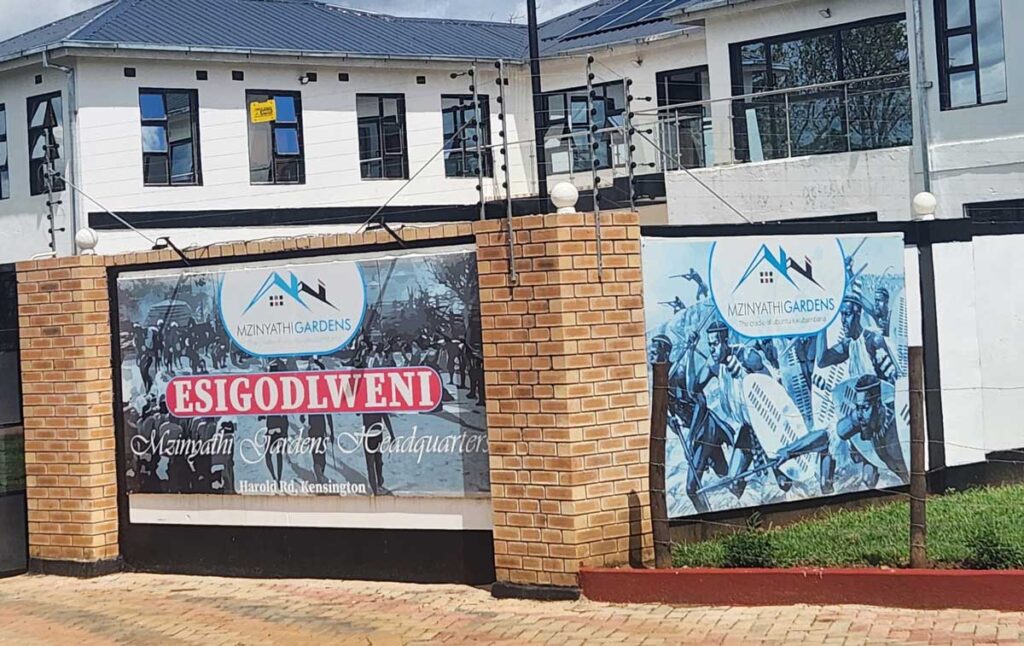
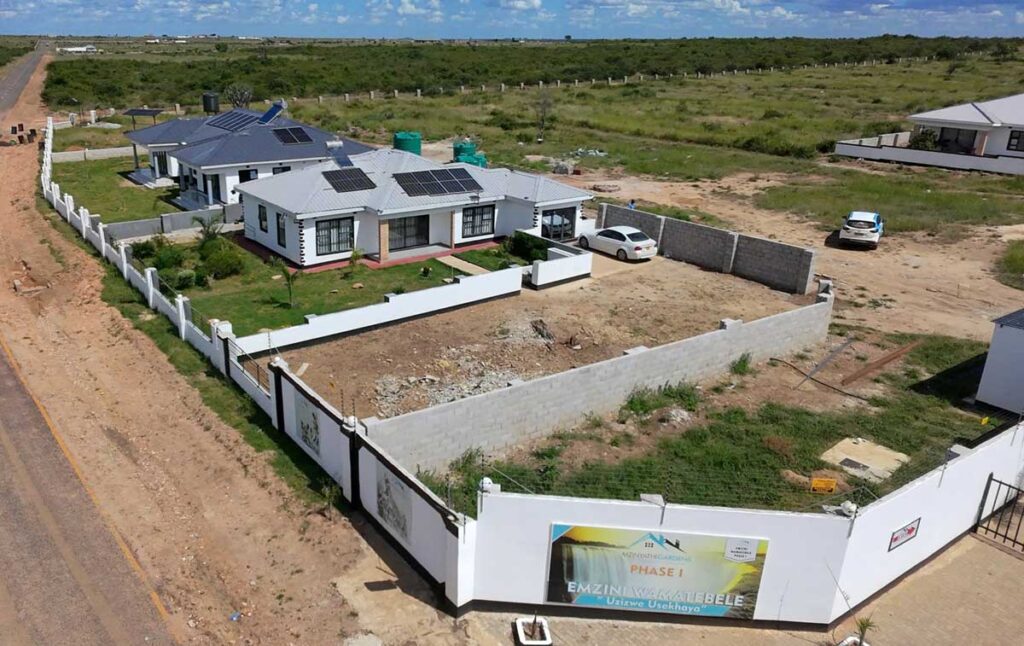
Kensington is an agro-residential peri-urban area surrounding Bulawayo, Zimbabwe’s second-largest city. A 17 km drive out of the city, along Gwanda Road, past the National University of Science and Technology (NUST), is a once-dormant piece of land. This is Mzinyathi Gardens, a gated community project begun in 2024, which is giving this part of Kensington a facelift, thanks to the diaspora dividend.
The project, wholly funded by private citizens, spells hope for a city that, historically, was Zimbabwe’s industrial nerve centre. The city’s nickname, ko Ntuthu-ziyathunqa, is an IsiNdebele phrase meaning “a place of continuously rising smoke”, describing a once-vibrant industrial hub.
The project deserves global attention as a replicable prototype of how Africa’s diaspora can unite to foster economic growth and improve citizens’ living standards in host communities. The project’s financing model, notwithstanding its challenges, offers an important paradigm shift in an era of constrained development cooperation.
In a March interview with Africa in Fact, Zazalizitha Khumalo, the project lead, emphasised that the project was inspired by a commitment to the restoration of the city of Bulawayo: “Ever since the early 2000s, when there was financial flight from Bulawayo to Harare and overseas, when white people closed down the industries…when most companies went…they left a big gap… Our youth have no employment because industry is dead in KwaBulawayo as we speak. We must at least try to bring that back… I don’t think it’s a political issue; I think it’s a business issue. We must just advertise our city as an industrial haven… and Zimbabwe is strategically positioned, you know, and we are not far from the sea, so we can sell to any part of the world; you just drive for a few hours from the border to the sea. When we started this Mzinyathi project, I had that in mind. I am one of those who were affected by the industrial flight, so it’s an emotional issue for me…. I wish it could be reversed because there is no life in South Africa …[Even though]…most of our kids now think when they finish form four or A level…rush to South Africa.”
Khumalo’s sentiments reiterate the need for Africa’s diaspora to reinvest its remittances and expertise in the homeland as a pathway from survival to sustainability. Based in Cape Town for many years now, Khumalo’s recommendations are informed by his lived experiences of the challenges and precarity of migrant life. But it is the invaluable exposure he has gained from Cape Town’s established economy that has equipped him with skills that have proved vital for benchmarking and ensuring the quality of the Mzinyathi project.
Despite being in its earliest phase, the project’s environmental and social contributions are already evident. Apart from the facelift occasioned by the construction of the project’s headquarters in December 2024, Khumalo successfully rallied the project members to undertake a road tarring project. One of Zimbabwe’s best contractors brought this to fruition.
The project has not only constructed a tarred road network across its various planned phases; it has also connected the previously untarred Harold, a community road, to the major Gwanda Road, a critical economic gateway to Bulawayo and South Africa. This road infrastructure is enhancing access and, therefore, social and economic activity. Critically, security for community members who have sometimes suffered crime, partly due to illegal gold-mining activities in the area, has been strengthened. Harold Road has also been fortified through a sustainably powered network of solar streetlights and CCTV. Harold is an important road for the local community whose daily life relies on access, and, importantly, it is creating investment interest.
As Khumalo noted, calling for a mindset change: “There is no more life for Zimbabweans in South Africa; this is the reality we have to face. The only way for us, especially those of us from Matabeleland, is to believe in each other, trust each other and work together to uplift the city.”
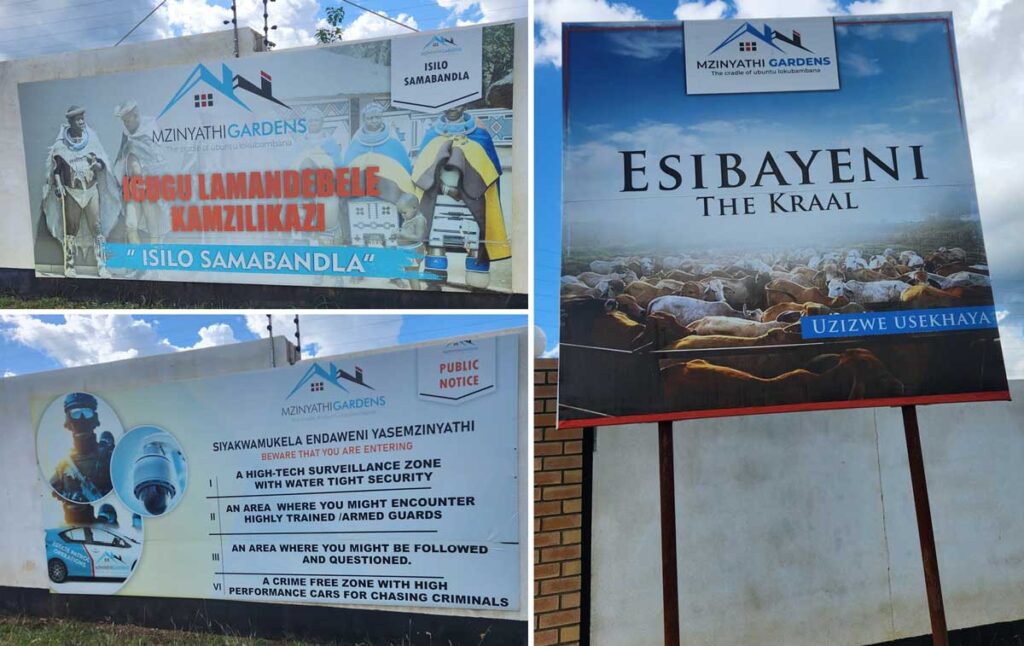
Mzinyathi is also having an impact on the community through its deliberate policy of recruiting a substantial number of its employees from the surrounding communities. Some of the employees are from the rural communities of Esihlengeni and Mzinyathini, as well as the agro-residential communities of Kensington and Spring Farm.
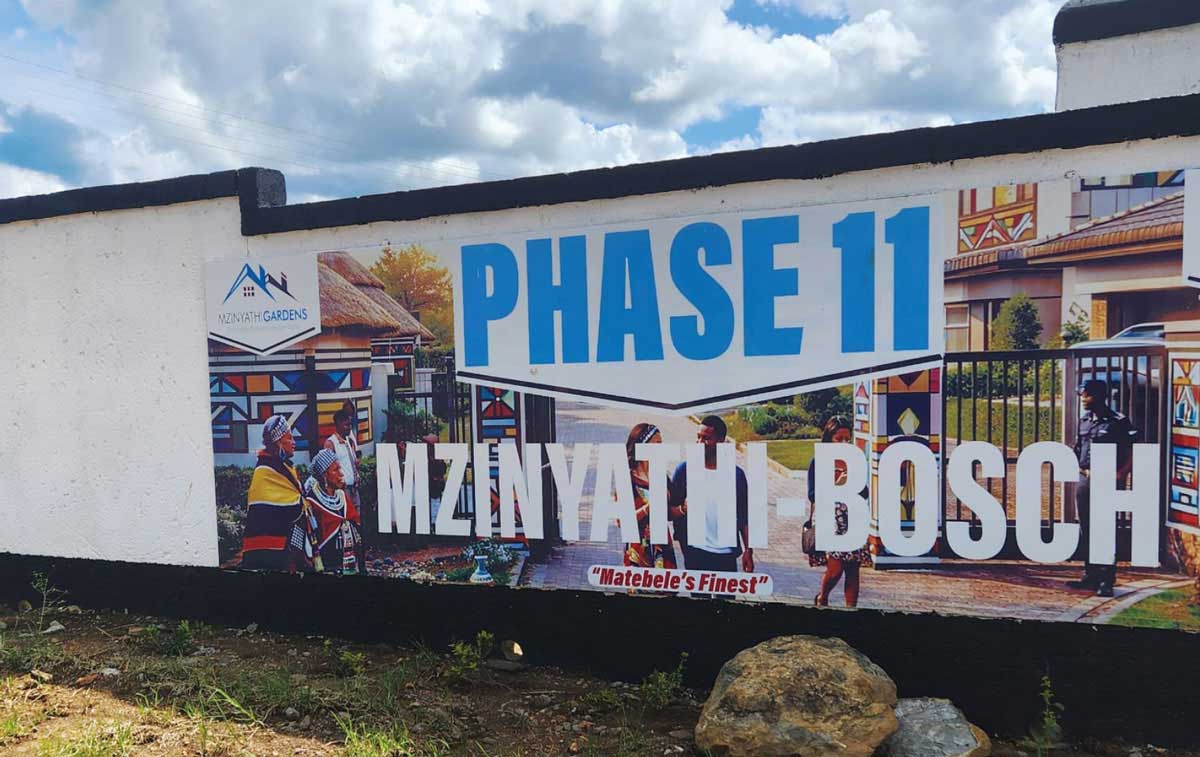
The project also represents more than just a roof over its residents’ heads. Within its vision of a future smart city, it also seeks to restore and uphold the region’s identity and pride. The project’s phase names are a rich embodiment of its history, traditions and cultural heritage. Khumalo believes that Bulawayo’s citizens, in their diversity, must be proud of who they are and work together to build the city. As part of this, the Mzinyathi Gardens project envisions, upon completion, a residential development of more than a thousand houses, accompanied by investments in educational and health facilities, a business park, a golf course, and a wine estate.
Although Mzinyathi Gardens is an independent initiative by private citizens, it is also one practical method of fulfilling the AfdB’s vision of “effectively mobilising the human and financial capital of the diaspora… to support socioeconomic development by reviving the domestic private sector… leveraging the expertise and networks of diaspora groups.”
Khumalo believes that by facilitating comprehensive devolution (political, administrative and, importantly, fiscal), the continent’s governments can propel cities to become engines of sustainable, inclusive growth. In this, the African diaspora is a key partner that, by learning from countries like India, should be incentivised to reinvest in their homeland.

Sikhululekile Mashingaidze entered into the governance field while she was a part-time enumerator for Mass Public Opinion Institute’s diversity of research projects during her undergraduate years. She has worked with Habakkuk Trust, Centre for Conflict Resolution (CCR-Kenya), Mercy Corps Zimbabwe and Action Aid International Zimbabwe, respectively. This has, over the years, enriched her grassroots and national-level governance projects’ implementation and management experience. Her academic research interests are in the field of genocide studies, driven by her commitment to deepening her understanding of girls' and women’s experiences and their agency in reconstituting everyday life, and their inclusion in peace-building and transitional justice processes. Socially, she has a keen commitment to supporting girls' education, women’s economic empowerment and the fulfilment of their equitable and sustainable development in Africa’s underserved, often hard-to-reach communities. She enjoys writing and telling the stories of navigating everyday life.