Whether legal or illegal, mining is increasingly encroaching on land reserved for vital community needs such as schools. Aside from the broader socio-economic fallout of mining – ranging from spikes in crime and prostitution to rising school dropouts as learners are lured into illegal gold mining – the clash over land use disrupts learning through actual displacement that may result in the closure of long-established schools, or their displacement in situ as the continuation of mining operations threatens learners’ ability to concentrate.
In this latter form of displacement, the safety, security, and health of the learners and school personnel are endangered by the land, water, air, and noise pollution that render the school environment uninhabitable. By highlighting this incompatibility, I have endeavoured to elicit lessons and proffer recommendations for sustainable solutions to the challenge of mining’s encroachment on learners’ right to education.
Undisputedly, the mining sector makes a critical contribution to the national fiscus and global mineral production. However, its unmitigated prioritisation has seen the proposition and, consequently, proliferation of mining projects, some of which, regrettably, come at huge, long-term costs to the host and target communities’ right to education. The resource curse phenomenon of the socio-economic and political ills occasioned by mining projects in the broader community is well documented.

In Zimbabwe, as in other jurisdictions, learners have and continue to be adversely impacted, to varying degrees, by both legal and illegal mining projects encroaching on their schools. This is evident from the numerous communities’ and schools’ legal and other forms of push-back against this encroachment. Some of these cases remain unresolved.
In March 2023, a classroom block caved in during lessons at the Globe and Phoenix Primary School, traumatising pupils and injuring between 13 and 17 of them. The trauma some of them suffered may take years to heal, and some may continue to find the classroom a traumatic environment, further affecting their learning capabilities. The school is in the gold-rich city of Kwekwe, about 200 km from Zimbabwe’s capital, Harare. Illegal mining spearheaded by amakorokoza (artisanal miners) tunnelling unmitigated under such critical public infrastructure resulted in decommissioning an institution that had served generations of learners since its establishment in 1925.
The incident marked the inevitable trajectory of a long-standing illegal mining environmental catastrophe, in which some residential properties have also collapsed and made uninhabitable. For years, environmentalists have warned that these tunnels, reported to extend right into the city centre, threaten to “swallow” the entirety of Kwekwe. This hazardous state rendered the school an unsuitable, dangerous learning environment and mitigatory measures, including decommissioning, were long overdue.
Mitigatory measures undertaken after this incident included temporarily moving learners to another school. According to a Newshawks report, the Civil Protection Unit (CPU) relocated learners to Sally Mugabe Primary School. This presented new challenges as learning took place in tents and was, on some days, disrupted by rain. The host school’s water, sanitation and other amenities were also ill-equipped for additional learners. However, as a Zimbabwe Broadcasting Corporation’s 20 August 2025 news report revealed, the new Globe and Phoenix Campus is nearly complete.

The Globe and Phoenix Primary School’s illegal gold mining experience is testimony to how mining has resulted in displacement that has led to relocation. Even without being relocated, schools’ operations are compromised by mining activities, resulting in students’ in situ displacement.
Apart from the long-standing challenges brought on by traditional illegal gold mining, a new wave of challenges in the context of energy transition has sparked a growing global demand for lithium and other green minerals. This has proved to be a curse for schools like Sandawana Primary in Zimbabwe’s Mberengwa district. In 2023, the Amalgamated Rural and Teachers Union of Zimbabwe(ARTUZ) raised an alarm over the noise and potential health hazard from lithium dust as mining occurred near the school.
In Hwange’s Lusumbami village, coal mining reportedly occurs within 100 m of the local primary school. The noise and air pollution disrupt learning, and mining has also contaminated the Deka River, a key water source.
In April this year, the ‘Citizen Bulletin’ noted that operations by the Chinese contractor Zimberly Investments “have disrupted school activities and damaged infrastructure, with cracks appearing on classroom walls and nearby houses. Windows have shattered from the constant blasting at the opencast mine.” The Citizen Bulletin revealed that communities’ push-back and other efforts to engage the mining companies had proved futile as these companies operated with little to no accountability.
The latest in these mining-induced disruptions to education is that of Bryden Country School in Chegutu, about 100 km outside Harare. In a tenacious push-back on a proposed lime and cement factory 497 m from its boundary, the school authorities have used stakeholder and powerholder engagements, a petition and legal action against Shuntai, a Chinese company. Shuntai’s operations continue in defiance of a High Court order for it to discontinue operations without the requisite authorisation in a Chegutu Municipality designated educational zone that includes three other educational institutions.

Shuntai was fined $10,000 for contempt of court but is appealing the High Court decision. The school has also taken the Environmental Management Agency (EMA) to court for the lack of transparency in granting Shuntai’s disputed environmental compliance certificate. Shuntai’s operations continue, and as noted by the Board of Governors chairperson, “the school has been experiencing increased dust influx as well as fumes from burning of noxious material, as well as noise of heavy machinery and some blasting, mainly experienced on the pool side of the school.”
Although, as the Zimbabwe Investment and Development Agency (ZIDA) highlights, mining is a significant economic pillar, government has an obligation to safeguard learners’ constitutionally enshrined right to education. Section 75(1) of the constitution indicates that “the State, through reasonable legislative and other measures, must make progressively available and accessible” this right to education.
The government, therefore, has an urgent mandate to review and outlaw the granting of concessions that compromise the education sector’s established capacity to effectively deliver on its long-term, equally critical, human capital development mandate. The Zimbabwe Lawyers for Human Rights (ZLHR) makes an important observation on the foundational role of education in ensuring an awareness and ability to demand, assert and realise other human rights.
The government amust take a proactive initiative to establish rigorous regulatory frameworks and binding legislation that outlaw mining’s encroachment onto designated educational zones, established schools, and other critical public infrastructure. These zones should not be open to prospecting. Communities should also be empowered with legal recourse to hold mining companies accountable for violating these provisions.
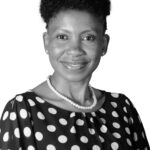
Sikhululekile Mashingaidze entered into the governance field while she was a part-time enumerator for Mass Public Opinion Institute’s diversity of research projects during her undergraduate years. She has worked with Habakkuk Trust, Centre for Conflict Resolution (CCR-Kenya), Mercy Corps Zimbabwe and Action Aid International Zimbabwe, respectively. This has, over the years, enriched her grassroots and national-level governance projects’ implementation and management experience. Her academic research interests are in the field of genocide studies, driven by her commitment to deepening her understanding of girls' and women’s experiences and their agency in reconstituting everyday life, and their inclusion in peace-building and transitional justice processes. Socially, she has a keen commitment to supporting girls' education, women’s economic empowerment and the fulfilment of their equitable and sustainable development in Africa’s underserved, often hard-to-reach communities. She enjoys writing and telling the stories of navigating everyday life.