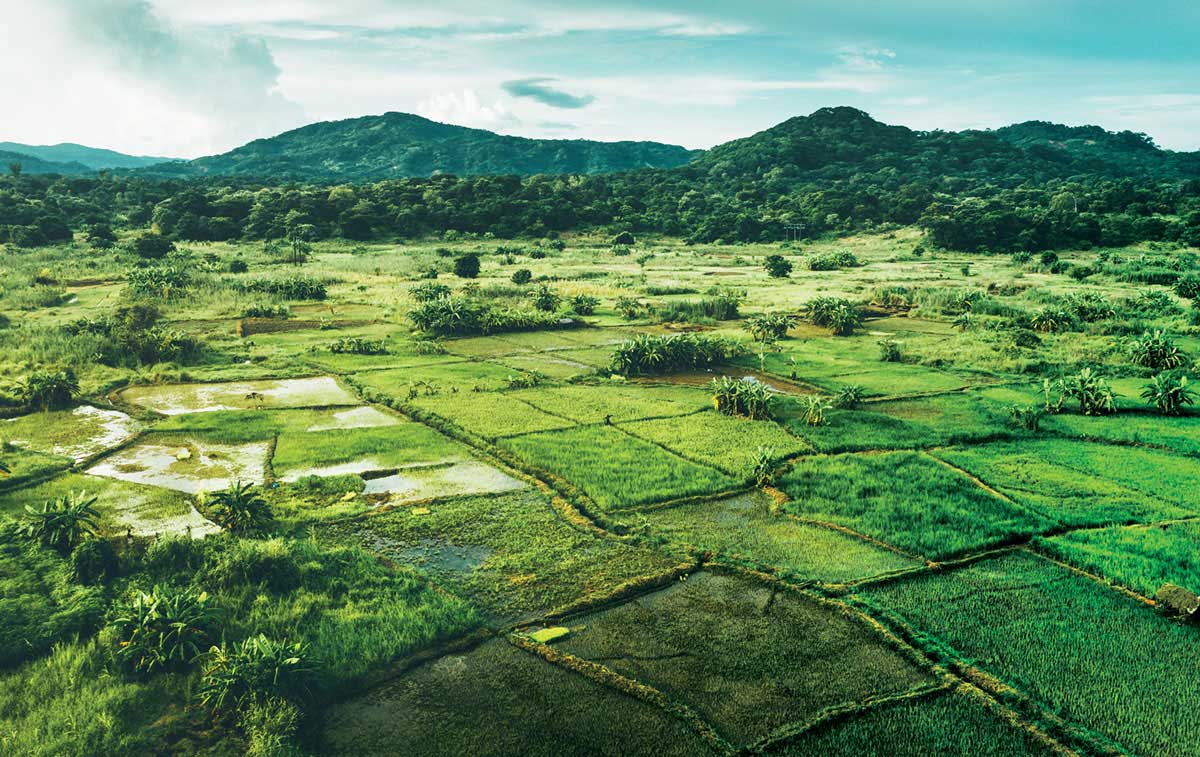
On the edge of Lilongwe’s Area 44, the maize field where 50-year-old Grace Nyimbiri’s parents buried their umbilical cords now lies behind plastic tape and concrete survey pegs. A man in a reflective vest tells her the land has been sold. She must leave before the rains begin.
There is no eviction order, no title deed, no official letter. Just an informal demand and a list of unfamiliar names posted on the group village headman’s wall. Next to it, a glossy brochure advertises ‘Green Lilongwe’, a planned gated estate.
Grace’s experience is part of a broader pattern playing out across Malawi’s capital.
As the government pursues its Vision 2063 goal of transforming Malawi into a self-reliant, industrialised upper middle-income nation, with urbanisation as one of its three enabling pillars, city officials, chiefs, and politically connected elites are quietly converting customary land into speculative real estate.
For many residents of peri-urban zones, the result is eviction without compensation, paperwork without recourse, and a future rewritten by invisible hands.
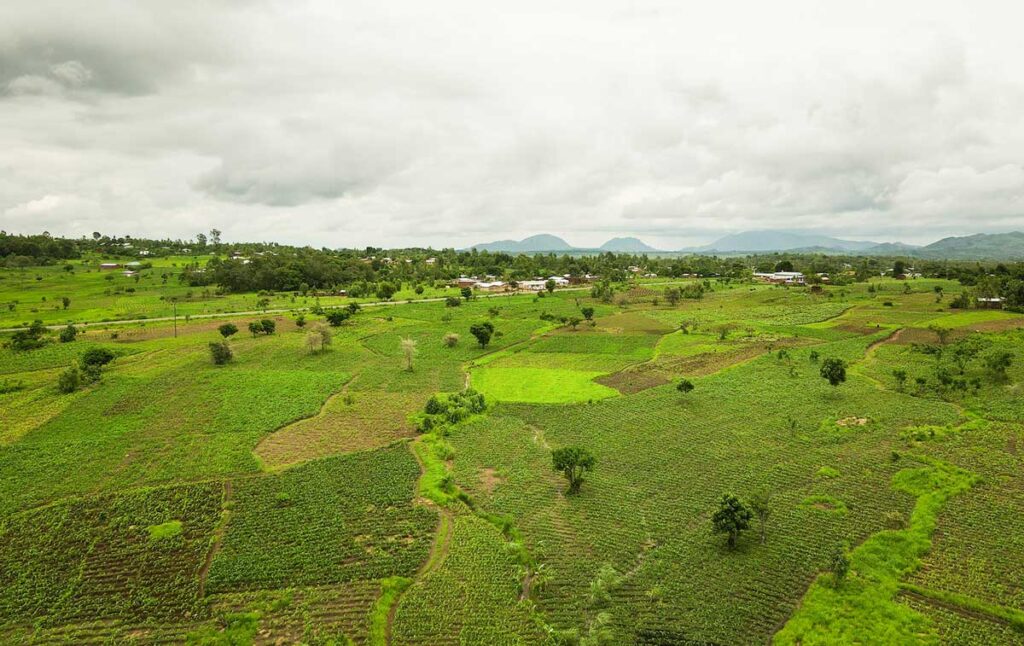
The crisis is rooted in governance gaps that have plagued Malawi’s land system for decades. The 2016 Customary Land Act was meant to formalise and protect community landholdings by replacing unwritten rules with documented rights.
But nearly a decade later, most of the mechanisms needed to implement the law, such as Customary Land Committees and District Land Tribunals remain dormant.
A 2024 University of Cape Town thesis examining land access in Lilongwe’s Areas 26, 44, 54, and 55 described the formal land system as marred by “limited human, technical and financial capacity and inconsistent application of the law.” Without functioning institutions, communities are left to rely on informal channels, including chiefs, surveyors, and city staff whose roles often overlap, and whose accountability is unclear.
The same study found that planning areas are frequently declared over customary land without following the legal processes required to extinguish existing tenure rights, violating both domestic law and international human rights standards.
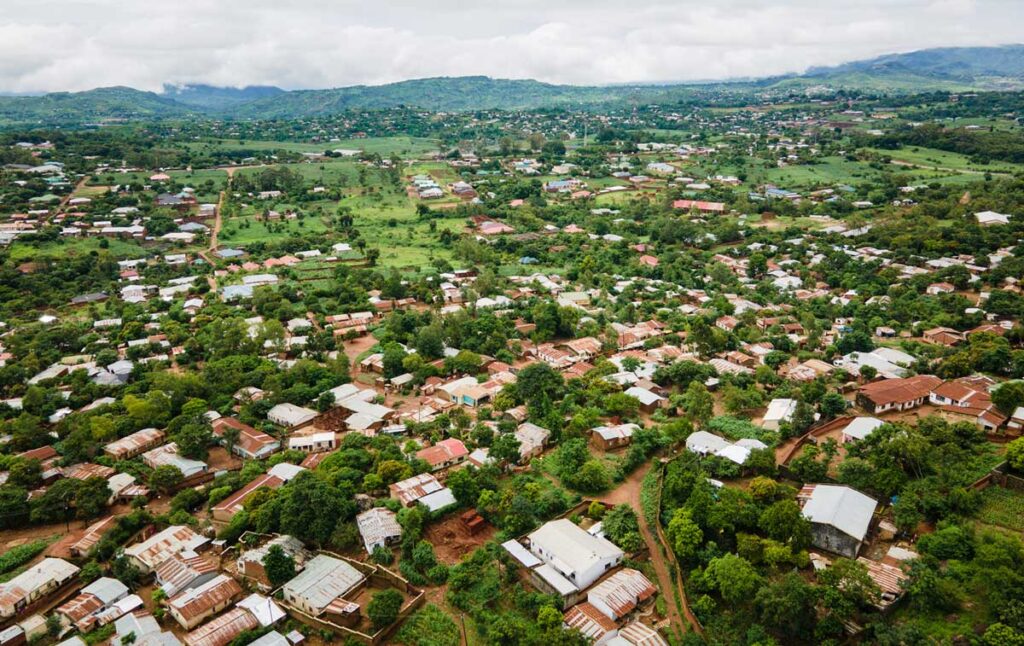
Malawi’s own 2019 National Urban Policy acknowledges the disorder: more than 70% of the country’s urban population lives in informal settlements, shaped by “poor coordination in urban land administration” and “overlapping mandates”.
Still, Lilongwe continues to expand its jurisdiction, declaring new planning zones over community land without the capacity or political will to fairly manage the process. The mechanisms of land conversion vary, but the trajectory is consistent. Chiefs, who under the 2016 law were meant to act as custodians of community land, have emerged as facilitators of dispossession.
A 2014 survey of Lilongwe’s informal settlements found that chiefs were involved in land allocation or sales in roughly half of these areas. Their control often correlates with a lack of formal documentation, making residents vulnerable to eviction.
In one notable case, Senior Chief Kulilani Chitukula, the traditional authority whose jurisdiction includes Area 49, was arrested for corruption related to land sales. Local accounts describe a system of “land laundering”, where plots are sold multiple times or retroactively legitimised in exchange for payments.
The financial incentives are significant. Research under the Malawi Priorities project, a research-based collaborative project implemented by Malawi’s National Planning Commission to identify development challenges and devise interventions, found that land values in Lilongwe can increase by 25% once titled. Another study found that plots near urban areas fetch prices nearly three times those in rural areas, a gap that widened between 2013 and 2016.
Into this opaque market step politically connected buyers. Professor Blessings Chinsinga of the University of Malawi has documented how senior government officials routinely bypass land allocation procedures. “The elites who are supposed to be driving these reforms have a huge stake in the status quo,” Chinsinga wrote in the Journal of International Development (Wiley) in 2011, in a paper titled ‘The politics of land reforms in Malawi: The case of the Community Based Rural Land Development Programme’. “They have acquired huge tracts of land.”
In early 2025, the scale of elite capture came into sharper focus. Allegations surfaced that then-Lilongwe Mayor Esther Sagawa had attempted to secure 70 out of 300 residential plots designated for public distribution in Area 27.
According to internal sources, Sagawa sent WhatsApp messages to city staff directing them to reserve the plots for herself and unidentified State House officials. When the city’s allocation committee raised objections, she reportedly issued threats.
The Anti-Corruption Bureau launched an investigation and froze all land allocations in Lilongwe. Its internal report recommended prosecution. But in July 2025, weeks before the September 16 presidential election, then-acting ACB Director General Hillary Chilomba abruptly closed the case, raising suspicions of political interference.
Also, last year, new allegations emerged that 417 hectares of public land in Area 55 had been allocated free of charge for the Magwero Industrial Park, a project involving the Africa-focused industrial firm Arise Integrated Industrial Platforms.
Critics, including whistleblower Anthony Bendulo, alleged the deal bypassed competitive processes and that the waiver of premium charges, worth approximately 130 billion Malawian kwacha (roughly $76 million), was irregularly authorised by the Secretary to the Treasury.
As early as 2019, then Principal Secretary in the Ministry of Lands, Joseph Mwandidya, admitted systemic problems. “The Ministry of Lands is rotten,” he said. “There is too much corruption, and people have been duped through a syndicate.”
The consequences of this broken system are borne by Lilongwe’s residents, especially the poor and land-insecure. A 2023 report by Malawi’s Land Governance Alliance found that a significant proportion of respondents in informal settlements believed they were likely to lose their land within five years. The most common reason cited was fear that a company or the government would seize it.
The African Cities Research Consortium estimates that roughly three quarters of Lilongwe’s population lives in informal or sub-standard housing, lacking secure tenure and access to basic services. Women face added vulnerability.
While Malawi’s inheritance systems vary, matrilineal in some regions, patrilineal in others, land titling often exacerbates gender inequality by reinforcing male ownership and excluding secondary rights holders.
More recently, the World Bank’s Agricultural Commercialisation project and efforts by UN-Habitat and Habitat for Humanity have promoted land titling in Lilongwe, helping 402 households in Area 27 through the Home Equals Project.
But pilot programmes have struggled to address structural problems. A 2020 assessment by multinational development advisors DAI noted that Malawi has too few licensed surveyors to implement widespread registration. In one district, a pilot project had to be relocated due to community pushback.
Early this year, Malawi’s new Minister of Lands, Housing and Urban Development, Chimwemwe Chipungu, promised a clean-up of the country’s land administration system, saying mounting public complaints over contested ownership, double allocations and unresolved leases had pushed the ministry to act, particularly in Lilongwe.
At a joint press conference with the Ministers of Homeland Security, Local Government and Information, Chipungu gave land grabbers 14 days to return unlawfully acquired land. “Individuals found to have illegally acquired land or violated conditions will be reported to the Ministry of Homeland Security for appropriate action,” he warned. “There is a new sheriff in town,” he declared.
On 23 February 2026, he moved from warnings to an on-the-ground exercise, launching a two-month national land ownership audit in Lilongwe. The audit began with a pilot in Areas 3 and 10 of Lilongwe City, where officials verified landholders, examined lease documents, and assessed the level of development on allocated plots.
Alongside the audit, the government ordered a nationwide land verification exercise to identify idle plots and expose politically connected beneficiaries. The Malawi Police Service was instructed to arrest those who have seized land through intimidation. But scepticism remains.
Lilongwe’s story mirrors trends across sub-Saharan Africa (SSA), where rapid urbanisation is outpacing state capacity and colliding with weak land governance. According to the United Nations SDG Report (2024), SSA had approximately 265 million slum dwellers in 2022, the highest concentration of any world region.
Malawi’s Vision 2063 targets 60% urbanisation by mid-century. But current projections suggest the country will reach only 24% by 2043. In the rush to modernise, peri-urban land is becoming a new battleground. The stakes are global. Sustainable Development Goal 11 calls for inclusive, safe, and sustainable cities by 2030. But a 2024 study warned that Malawi’s current trajectory, marked by elite capture and legal inertia, makes achieving this target unlikely.
The roots of the crisis run deep. Malawi’s post-independence land policies favoured political patronage over equitable access. According to the African Cities Research Consortium, Lilongwe’s political system rewards loyalty with land, undermining planning efforts through clientelism and short-termism.
An October 2024 ruling by the Office of the Ombudsman revealed a backlog of land allocation complaints dating back to 2004. The report found that applications were not processed transparently or on a first-come, first-served basis. Ombudsman Grace Malera issued a 90-day ultimatum for the Ministry of Lands to compile a complete land allocation waiting list. “What we are seeing is unequal land allocation practices,” she concluded.
As Professor Chinsinga has noted, Malawi’s governance struggles stem from a “failure to learn from its own mistakes”. Nowhere is that more evident than in land reform, where efforts to fix the system have created new opportunities for abuse.
For Grace, and thousands of others like her, the promises of secure tenure and inclusive planning remain distant. The path to a modern capital may be paved with development blueprints and glossy brochures. But for many residents like Grace, it starts with displacement.